
 русский
 Français
 Español
 Deutsch
 عربى
عربى
A Practical Guide to Premium Reciprocating Quick-Charge Electric Shavers
Modern grooming users increasingly expect more from an electric shaver than a simple motor and cutting foil. They want a device that can deliver a close, comfortable shave, operate quietly and efficiently, recharge conveniently, remain easy to clean, and maintain reliable performance over time. At the same time, retailers, distributors, and private-label brands need products that are practical to manufacture, adaptable for different markets, and supported by a dependable OEM/ODM partner.
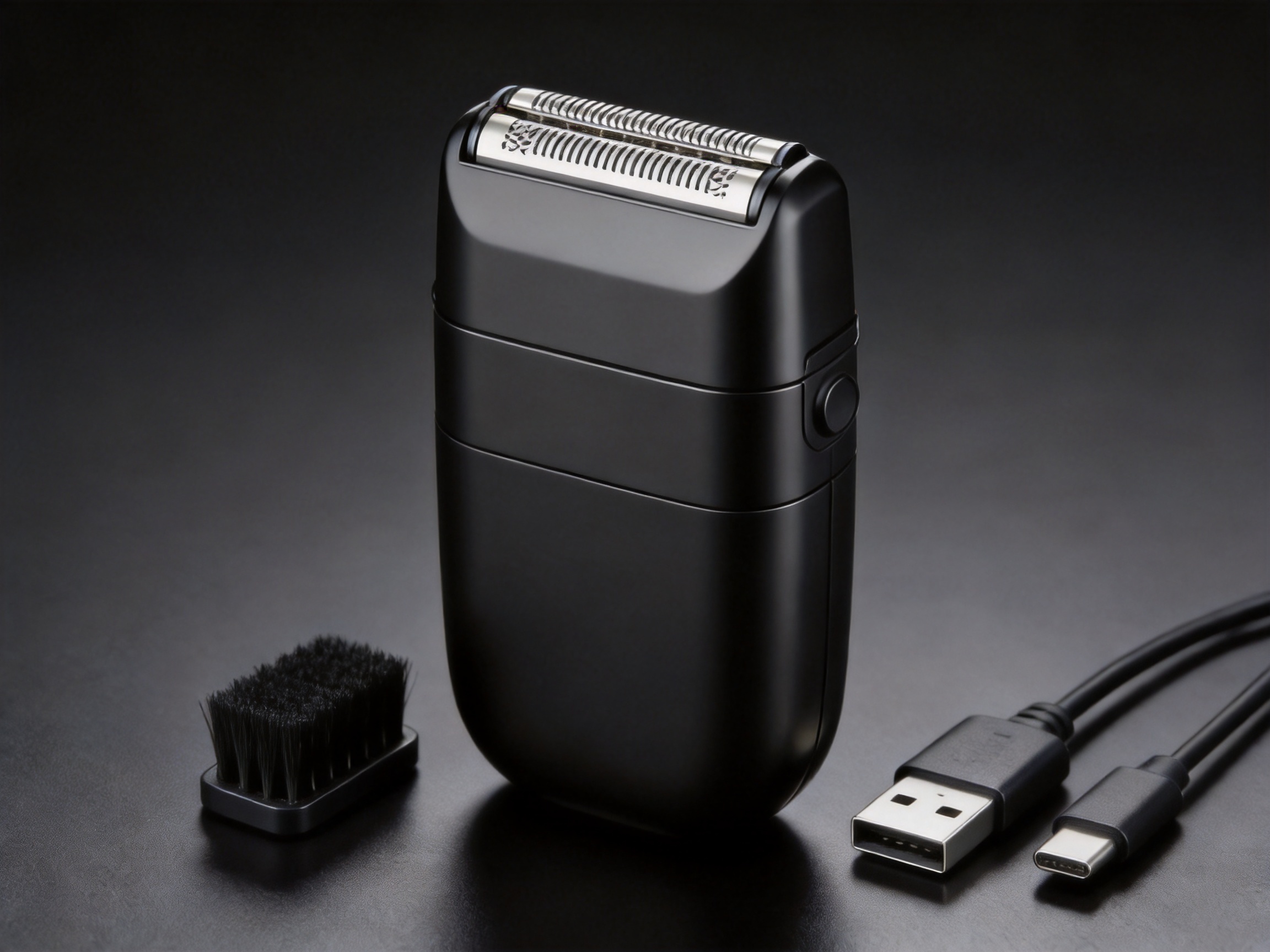
The LT-865 Premium Gentleman Reciprocating Quick Charge Shaver is designed to address these needs through a compact personal-care platform built around a reciprocating etched blade cutter head, a rechargeable 14500/600 mAh battery, USB charging, and an 8,300 RPM motor. Its black ABS body, compact packaging format, and included cleaning brush and USB cable make it suitable for daily personal use, travel, retail distribution, and customized grooming-product programs.
This article examines the product’s design, operating characteristics, practical advantages, manufacturing background, quality strengths, and potential applications. It also explains how the shaver compares with common alternatives in the electric grooming market and why manufacturing capability is an important consideration when selecting a personal-care appliance supplier.
Product Overview and Design Purpose
The LT-865 is an electric shaver in the reciprocating category. Unlike rotary shavers, which generally use circular heads that move in a rotating pattern, a reciprocating shaver uses a blade mechanism that moves rapidly back and forth beneath or against a protective cutting surface. This configuration is often associated with a direct shaving action and a slim head profile that can be useful when following the contours of the face.
The device is built with a black ABS main body. Acrylonitrile butadiene styrene, commonly known as ABS, is widely used in small electrical appliances because it offers a practical balance of rigidity, impact resistance, moldability, and cost efficiency. For a personal-care product, the material also supports the production of shaped housings with comfortable edges, integrated controls, and a consistent appearance across large production runs.
Inside the device, the 3.2-volt motor is rated at 8,300 RPM. This operating speed provides the cutting head with rapid movement for ordinary facial shaving tasks. The motor is paired with a 5-watt power specification, which indicates a compact electrical system intended to balance cutting performance with portable battery operation.
Power is supplied by a 14500-format rechargeable battery with a stated capacity of 600 mAh. The unit charges through a USB port, and one USB cable is included in the package. The stated charging time is approximately two hours, while the stated discharge time is approximately 70 minutes. These specifications make the device practical for regular household use and convenient for travelers who already carry USB power adapters, computers, power banks, or other compatible charging equipment.
The package includes a cleaning brush as well as the USB cable. The brush supports routine removal of loose hair and debris from the cutter-head area. Keeping the cutting mechanism clear is important because accumulated hair can interfere with movement, increase friction, and reduce the consistency of shaving performance.
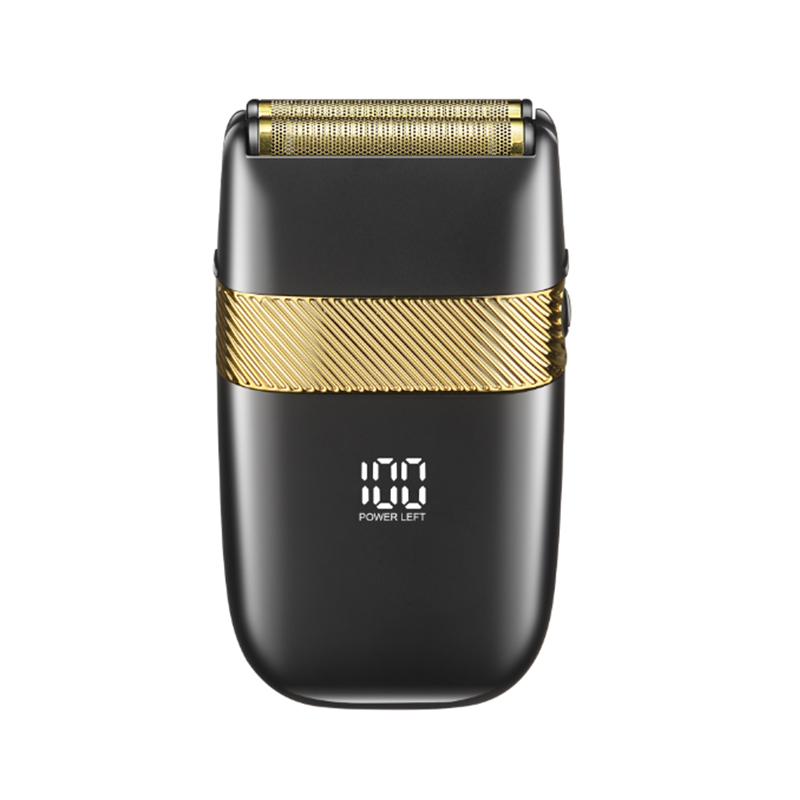
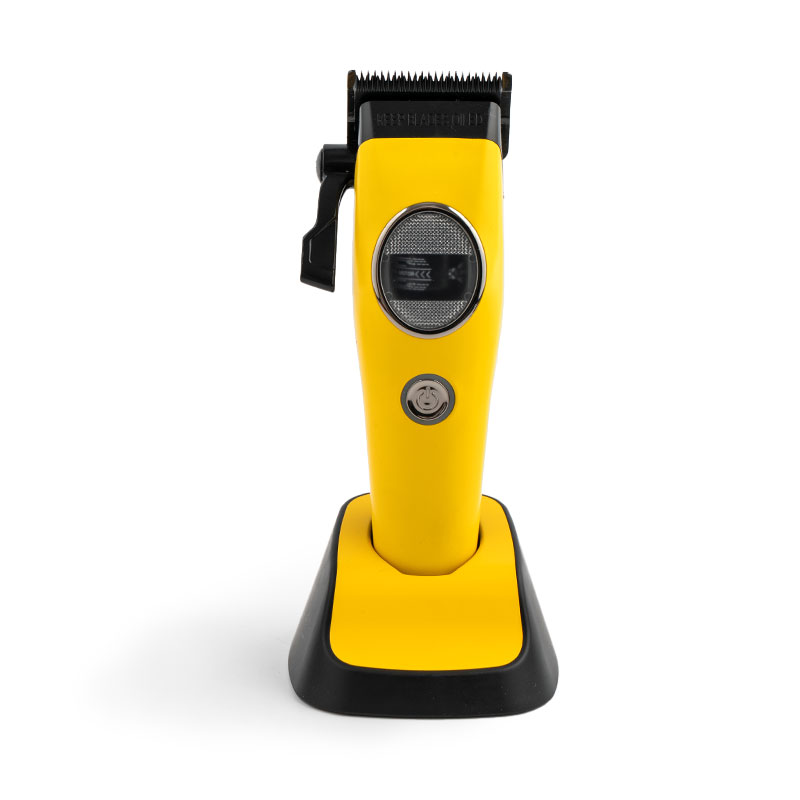
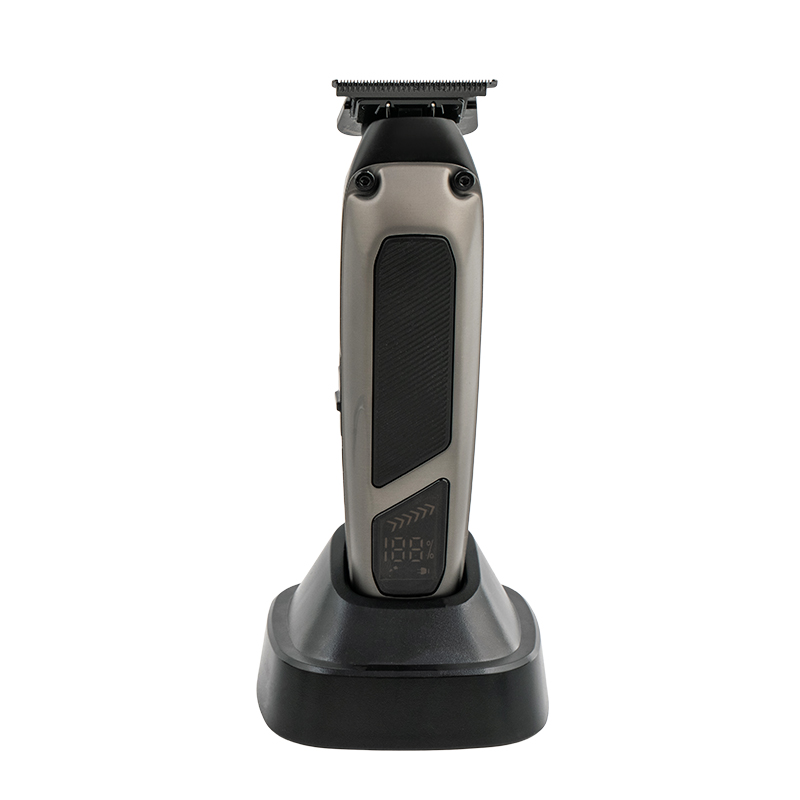
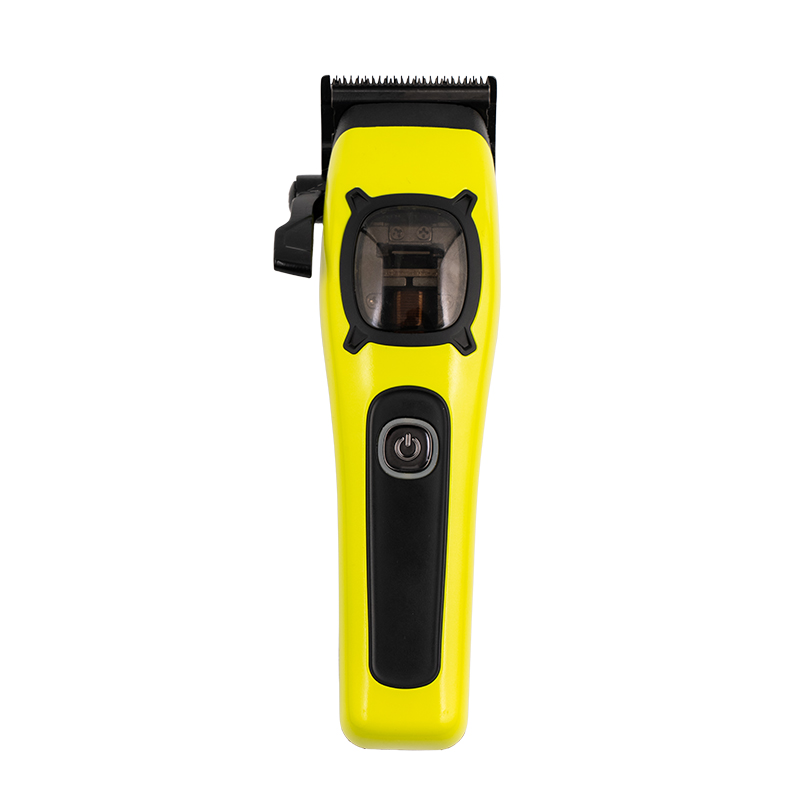
LT-865 Premium Gentleman Reciprocating Quick Charge Shaver
Core Technical Specifications
The following table summarizes the principal specifications supplied for the product.
| Specification | Details |
|---|---|
| Product type | Reciprocating electric shaver |
| Product color | Black |
| Main body material | ABS |
| Cutter head | Etched blade |
| Battery model | 14500 / 600 mAh |
| Motor speed | 3.2 V, 8,300 RPM |
| Power rating | 5 W |
| Charging method | USB port |
| Charging time | Approximately 2 hours |
| Discharging time | Approximately 70 minutes |
| Included accessories | Cleaning brush and USB cable |
| Packaging | Color box with blister small gift box packaging |
These specifications describe a compact, battery-powered shaver intended for convenient grooming rather than a corded professional appliance. The combination of a moderate charging period and a 70-minute stated operating period supports repeated use between charging sessions. Actual runtime can vary according to shaving pressure, hair density, cleaning condition, battery age, operating temperature, and other usage factors.
Reciprocating Shaving Technology
The reciprocating format is one of the most recognizable designs in the electric-shaver category. Its cutting element moves in a linear back-and-forth direction, allowing the device to work through short facial hair as the user guides the head across the skin. This design can offer a more direct feeling than some rotary alternatives, especially for users accustomed to straight shaving strokes.
An etched blade is used as the cutter head. Etching is a precision manufacturing method that can create fine blade structures with repeatable patterns. In a compact shaver, accurate blade formation is important because the cutter must interact with the protective surface and moving mechanism without excessive friction or irregular contact. Consistency in the blade structure can contribute to stable cutting action and predictable assembly results.
The cutter head is a central performance component. Even a strong motor cannot compensate fully for an imprecise or poorly assembled cutting system. The blade, protective surface, spring or support structure, and drive connection must work together. Manufacturing tolerances therefore influence the smoothness of operation, the sound produced during use, the durability of the mechanism, and the user’s perception of shaving quality.
For users, a reciprocating head may be especially useful for controlled strokes along the cheeks, jawline, chin, and upper-lip area. The device should be held comfortably and moved according to the contours of the face rather than pressed aggressively against the skin. Moderate pressure is generally preferable because excessive force can create discomfort and may place unnecessary stress on the cutting assembly.
Why the Motor Specification Matters
The stated motor speed of 8,300 RPM indicates that the moving cutter is designed for rapid repeated action. A high-speed compact motor can help the blade process hair efficiently, but speed alone does not determine the complete shaving experience. Cutting geometry, head alignment, battery output, housing stability, and user technique are also important.
The 3.2-volt motor rating is appropriate for a compact rechargeable system. It allows the product to remain portable without depending on a permanent mains connection. The 5-watt power specification provides a useful reference for distributors and technical buyers assessing the product’s electrical architecture and expected energy use.
A well-balanced motor system should maintain consistent movement during ordinary operation. If a motor slows excessively under normal shaving pressure, the user may experience pulling or incomplete cutting. The design objective is therefore not simply maximum speed, but a stable relationship between motor output, blade resistance, battery discharge behavior, and mechanical load.
Quick-Change and USB Charging Convenience
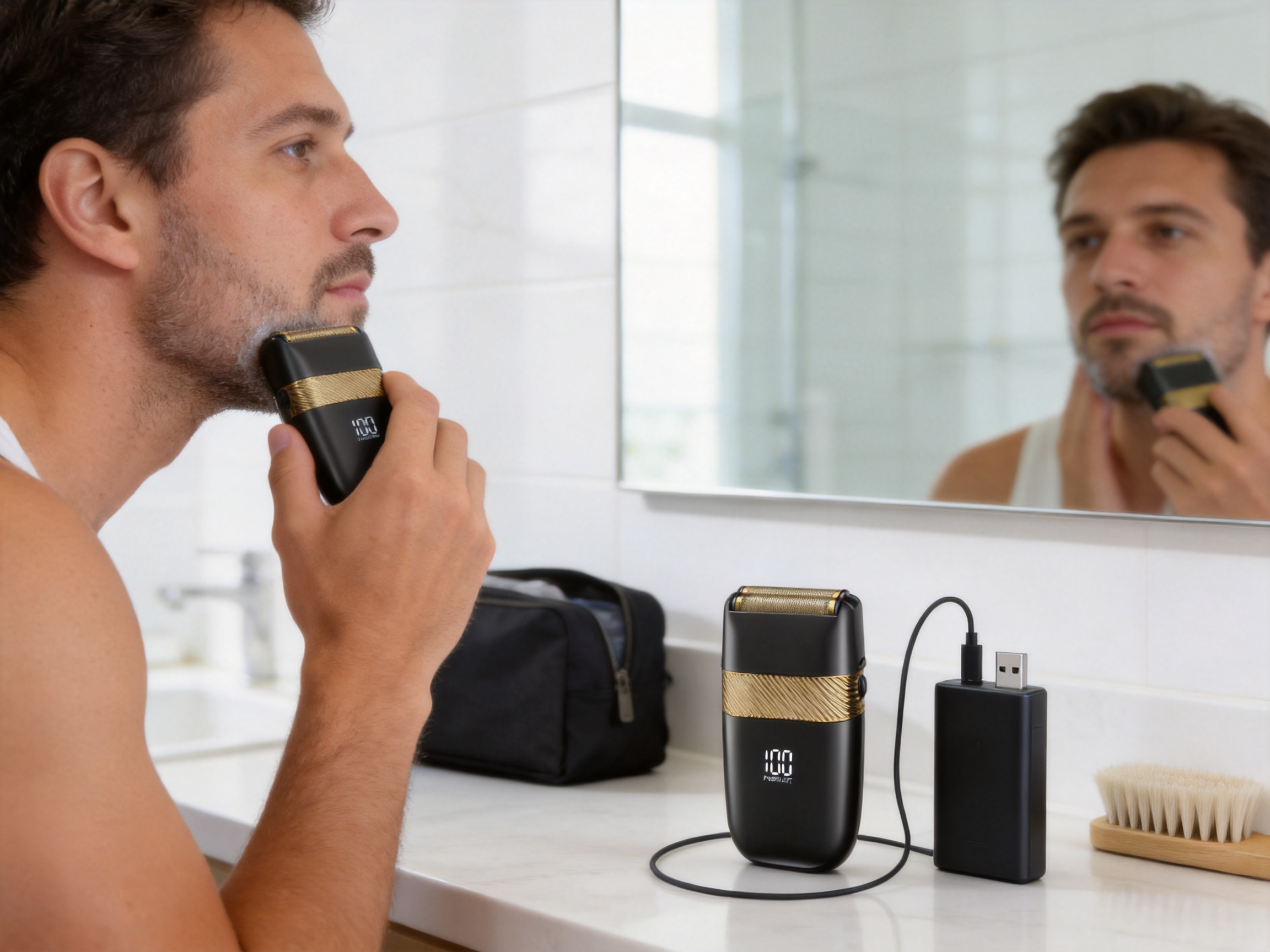
Charging convenience is one of the strongest practical features of the LT-865. The product uses a USB port and includes a USB cable, which supports flexible charging in homes, offices, hotels, vehicles, and travel environments. Users do not need to rely on a specialized proprietary charging base when a compatible USB power source is available.
The approximately two-hour charging time is suitable for planned daily or periodic charging. Once charged, the product provides a stated discharge time of approximately 70 minutes. For many users, this can represent multiple shaving sessions before another charging cycle is required. The exact number of sessions depends on how long each session lasts and how the device is used.
USB compatibility can also reduce logistical complexity for retailers and distributors. A product supplied with a standard charging cable is easier to explain to customers than one requiring an unusual adapter. It may also be more adaptable for international markets, subject to the appropriate charger, plug, electrical, and regulatory requirements of each destination.
The battery specification provides an additional advantage for product planning. A 14500-format, 600 mAh rechargeable battery is compact and suitable for small hand-held appliances. Its size helps the manufacturer balance internal space, product weight, runtime, and housing dimensions. Battery performance should be evaluated together with protection circuitry, charging control, wiring quality, and final assembly practices.
Quick charging should not be interpreted as unlimited immediate operation. Users should follow the supplier’s charging instructions, avoid using damaged cables, and keep the charging port free from moisture and debris. For long-term performance, the shaver should be stored in a dry environment and charged using a suitable USB power source.
Ergonomics, Materials, and Daily Handling
The black ABS body gives the shaver a clean, understated appearance that can appeal to a broad range of consumers. Black is widely used in men’s grooming products because it communicates simplicity, practicality, and premium positioning without relying on complex color combinations. It also provides a suitable base for private-label printing, surface treatments, control markings, and packaging coordination.
ABS is a practical housing material for electric shavers because it can be injection molded into a wide range of shapes. The manufacturer can create curved surfaces, finger-support areas, recessed switches, battery compartments, and internal mounting structures within the same general housing architecture. Injection molding also supports repeatability when the tooling, material, temperature, pressure, and cooling conditions are properly controlled.
A well-designed housing does more than create visual appeal. It protects internal components from ordinary handling, helps position the motor and battery, reduces movement between components, and contributes to the overall balance of the appliance. Stable internal positioning is particularly important for a high-speed cutter because unnecessary vibration can affect noise, comfort, and mechanical wear.
The product’s compact structure is also valuable for travel. A smaller shaver can fit easily into a toiletry bag, carry-on case, desk drawer, or bathroom cabinet. The included cleaning brush allows basic maintenance without requiring a separate accessory purchase.
Maintenance and Cleaning
Routine cleaning is an essential part of electric-shaver ownership. Short hair fragments, skin particles, and natural oils can collect around the cutter head during use. If these materials remain in the mechanism, they may restrict movement or make the cutting head less efficient.
The supplied cleaning brush is intended to remove loose residue from the accessible areas of the head. Cleaning should be performed carefully, with the device switched off and disconnected from the charging cable. Users should consult the applicable product instructions before exposing any component to water, because the supplied specifications do not state that the shaver is waterproof or washable.
Regular cleaning can support hygiene and help preserve the operating condition of the blade. The frequency should reflect usage. A person who shaves every day may need to brush the head after each use or at regular intervals, while occasional users may clean the unit after every grooming session and before storage.
Cleaning should not involve sharp tools, aggressive solvents, or excessive force. Such methods can damage the blade, protective components, coating, housing, or electrical seals. A gentle maintenance routine is normally more beneficial than irregular deep cleaning performed with unsuitable materials.
Advantages Compared with Common Alternatives
The LT-865 competes in a market that includes disposable razors, corded shavers, rotary electric shavers, rechargeable trimmers, and higher-capacity premium appliances. Its advantages are most apparent when the user values portability, USB convenience, a direct reciprocating mechanism, and a straightforward accessory package.
Compared with Disposable Razors
Disposable razors require recurring purchases of blades or complete units. They can provide a very close shave when used correctly, but they also require shaving cream or gel for many users and can cause irritation if excessive pressure is applied. Their ongoing consumable cost may become significant over time.
A rechargeable electric shaver offers a different ownership model. After the initial purchase, the primary routine requirements are charging and cleaning. The user can shave without preparing water, foam, or a replacement blade for every session. This can make the device more convenient for quick morning grooming, travel, or workplace use.
The electric format also reduces the risk associated with handling an exposed razor blade. It does not eliminate the possibility of skin discomfort, but the protective cutter arrangement is designed for powered grooming rather than direct blade contact with the skin.
Compared with Corded Electric Shavers
Corded shavers depend on access to a wall outlet during operation. They may be suitable for fixed bathroom use, but their cables can limit movement and make packing more difficult. The LT-865’s rechargeable design removes the need to remain near an outlet while shaving.
USB charging also provides greater flexibility in locations where a conventional power socket is unavailable or inconvenient. A traveler can charge the shaver from a laptop, vehicle adapter, power bank, or suitable USB wall charger, depending on local electrical practices and the compatibility of the charging source.
Compared with Rotary Shavers
Rotary shavers are often selected for their multi-directional head movement and ability to follow curved facial areas. A reciprocating shaver uses a different motion and may appeal to users who prefer straight, deliberate strokes. The choice between the two designs is partly a matter of beard type, facial shape, technique, and personal preference.
The LT-865 offers a focused reciprocating format rather than a multi-rotary head arrangement. This can simplify the mechanical structure and provide a more direct cutting feel. It may also be easier for users who are transitioning from traditional straight razor or cartridge-razor strokes.
Compared with Basic Trimmers
Many trimmers are intended to shorten longer hair, define edges, or maintain a beard rather than provide a close facial shave. Their guards and exposed teeth are useful for controlled length reduction but may not deliver the same finish as a dedicated shaver.
The LT-865 is positioned as an electric shaver, with an etched cutter head and high-speed reciprocating action. It is therefore more suitable for users who want to remove short facial stubble rather than simply trim a beard to a selected length. For consumers who need both functions, a shaver and a separate clipper or trimmer may provide a more complete grooming system.
Product Benefits for Retailers and Distributors
The product’s specification set is suitable for a variety of sales channels. A compact black shaver with USB charging is easy to position in men’s personal-care, travel, grooming, electronics, and gift categories. The color box and blister small gift box packaging can support shelf presentation, promotional bundles, and online product photography.
The included accessories help create a complete consumer proposition. A package containing the shaver, cleaning brush, and USB cable allows the customer to begin using the product without immediately purchasing supplementary items. This can improve the clarity of retail listings and reduce confusion during after-sales support.
The product also has potential for OEM and ODM programs. Buyers may evaluate the housing color, packaging graphics, printed branding, control markings, accessory presentation, and language configuration according to their target markets. The actual scope of customization should be confirmed during technical and commercial discussions, because available options depend on tooling, minimum order quantity, certification, packaging requirements, and production scheduling.
For distributors, a stable specification platform can simplify inventory planning. The 5-watt power rating, USB charging system, 600 mAh battery, and 70-minute stated discharge time provide clear talking points for product pages, catalogs, and sales training materials. The shaver can be promoted as a compact rechargeable grooming appliance rather than as a complicated multi-function system.
Retail success also depends on accurate communication. Product descriptions should explain that operating time may vary, that the shaver is intended for suitable facial-hair applications, and that cleaning and charging instructions should be followed. Clear information helps reduce unrealistic expectations and supports better customer satisfaction.
Manufacturing Capabilities and Industrial Foundation
The manufacturer, Yuyao Laituo Electric Appliance Co., Ltd., is based in Yuyao Industrial Park in Ningbo City, China. The company describes Yuyao as the Hometown of Moulds, reflecting the region’s established connection with mold development, plastic processing, mechanical components, and manufacturing services.
The company focuses on hair clippers, electric shavers, and body trimmers. Its operations combine research and development, production, and sales, allowing product concepts and manufacturing considerations to be coordinated within one organization. This integrated structure can be valuable for OEM and ODM customers because design decisions often influence tooling, assembly, testing, packaging, and cost at the same time.
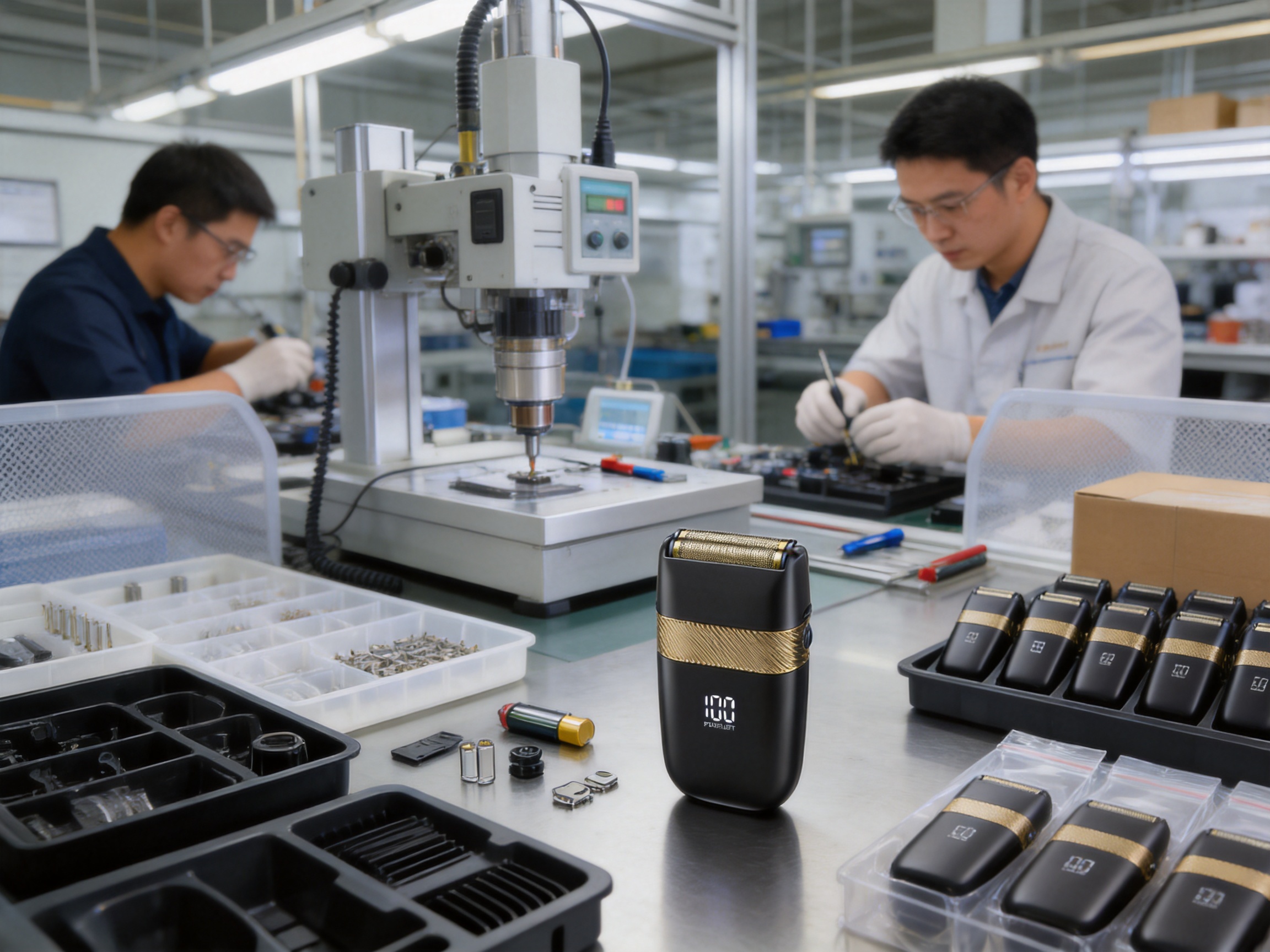
The company reports an operating area of approximately 1,000 square meters and nearly 100 employees. It also reports fully automated production lines and precision testing equipment. These resources are important for a personal-care appliance manufacturer because small electrical products require accurate control over plastic parts, motors, batteries, cutters, fasteners, wiring, charging systems, and final assembly.
A modern production process generally begins with product definition and engineering review. The manufacturer evaluates the intended function, housing structure, component placement, power system, cutter-head design, packaging method, and applicable market requirements. Prototype development can then be used to check dimensions, ergonomics, electrical performance, vibration, assembly feasibility, and appearance.
Tooling is another important manufacturing stage. The mold determines the repeatability of the ABS housing and influences surface finish, part alignment, wall thickness, and assembly fit. A strong mold-development capability can help reduce flash, deformation, inconsistent gaps, and other defects that may affect the finished appliance.
After molding, components are inspected and prepared for assembly. The motor, battery, charging parts, cutter head, switch elements, internal supports, and housing sections must be correctly positioned. Automated or semi-automated production lines can improve consistency by controlling repeated assembly tasks and reducing variation between units.
Electrical and mechanical testing should be integrated into the production process. Typical evaluation areas may include charging behavior, motor operation, current consumption, operating noise, switch function, battery connection, cutter movement, appearance, and packaging integrity. The exact test program depends on the product design and customer requirements, but precision testing equipment provides the basis for objective quality verification.
Quality Control from Component to Finished Product
Quality control is particularly important for rechargeable grooming devices. The product combines a high-speed motor, a moving blade mechanism, a lithium battery format, a USB charging circuit, and a molded housing. A defect in any one of these areas can affect safety, performance, durability, or customer perception.
At the component level, incoming inspection can verify that materials and parts conform to approved specifications. ABS housings may be checked for color, surface condition, dimensions, and molding defects. Motors may be evaluated for speed, current draw, noise, and vibration. Batteries and charging components may be inspected for capacity, connection quality, and compatibility with the intended circuit.
At the assembly level, quality personnel can confirm that the cutter head is properly seated, the motor drive is securely connected, the battery is positioned safely, and the housing is closed with appropriate alignment. Correct assembly is essential because a small shift in the blade or drive system can influence shaving performance and operating noise.
At the finished-product level, inspection may include visual review, functional operation, charging verification, discharge checks, switch testing, accessory confirmation, and packaging inspection. Product testing does not merely identify defective units; it also generates process information that can be used to improve production consistency.
The company states that its products have passed CE and RoHS certifications. CE marking relates to conformity with applicable European Union requirements for relevant product categories, while RoHS addresses restrictions on certain hazardous substances in electrical and electronic equipment. Specific certification scope, applicable directives, test reports, and destination-market requirements should always be confirmed for the exact model and configuration being purchased.
Certification is an important foundation, but it should be considered alongside ongoing production control. A compliant design must be manufactured consistently, and any change to the battery, charger, motor, circuit board, materials, or construction may require additional technical review. Responsible OEM/ODM cooperation therefore includes document control, sample approval, change management, and clear communication between the buyer and manufacturer.
OEM and ODM Cooperation Potential
OEM cooperation allows a buyer to market a manufactured product under its own brand or commercial identity, subject to an agreed specification and branding program. ODM cooperation may involve a broader relationship in which the manufacturer contributes product design, engineering, configuration, packaging development, or technical adaptation.
The LT-865 can serve as a starting platform for these discussions. Potential areas for customization may include external color, logo application, package artwork, instruction materials, accessory presentation, barcode labeling, and regional language requirements. Some buyers may also request changes to the battery, cable, charging configuration, or housing details, although technical modifications must be evaluated carefully.
Customization should be approached systematically. The buyer should first define the target customer, sales channel, country or region, expected retail price, required certifications, packaging language, order volume, and desired delivery schedule. The manufacturer can then assess whether the requested changes can be achieved using existing tooling or whether new molds, components, or testing are necessary.
Sampling is an essential part of the process. A pre-production sample allows the buyer to review the physical appearance, grip, cutter-head construction, charging behavior, packaging, accessories, and printed materials. Any observations should be documented before mass production. This procedure helps avoid misunderstandings and gives the factory a clear reference for final assembly.
For private-label products, packaging is especially important. The color box and blister gift-box format can be adapted to communicate product benefits such as USB charging, rechargeable operation, included cleaning brush, and compact design. Graphics should avoid unsupported claims and should describe operating time, charging time, water resistance, and accessories accurately.
A dependable OEM/ODM partner should also provide practical communication during production. Buyers benefit from clear quotations, confirmed lead times, sample approval procedures, inspection standards, packing details, and after-sales support arrangements. The manufacturer’s integrated R&D, production, and sales structure may help coordinate these activities more efficiently than a fragmented supply chain.
Use Cases and Target Customers
The shaver is suitable for men who want a compact electric solution for facial grooming. It may be used for weekday shaving, occasional touch-ups, business travel, holidays, or use away from a home bathroom. Its black exterior and simple accessory set also make it suitable for gift-oriented retail programs.
Frequent travelers may appreciate the rechargeable design and USB cable. Instead of packing shaving foam, replacement cartridges, and a dedicated power adapter, the user can carry one small appliance and its charging cable. The 70-minute stated discharge period provides useful independence from immediate access to a power source.
Office workers and commuters may value the device for quick grooming before meetings or social events. Because the product is compact, it can be kept in a desk drawer, vehicle storage compartment, or travel case. Users should clean and store it properly, especially if it is carried with other personal items.
Retailers may position the shaver alongside hair clippers, body groomers, nose hair trimmers, and other personal-care appliances. A broader product category allows customers to choose the tool most appropriate for each grooming task. The LT-865 can occupy the facial-shaving segment within such a portfolio.
Distributors serving hotels, corporate gift programs, travel retailers, and convenience-oriented electronics stores may also consider the product. Its packaging and included accessories make it easier to present as a ready-to-use appliance. Suitability for any specific commercial program will depend on order quantities, branding, packaging, and regulatory requirements.
Responsible Product Positioning
Effective marketing should highlight the device’s genuine features rather than rely on exaggerated promises. Appropriate selling points include reciprocating operation, an etched blade, an 8,300 RPM motor, USB charging, a 600 mAh rechargeable battery, approximately 70 minutes of stated discharge time, a black ABS housing, and an included cleaning brush.
Claims such as “waterproof,” “hypoallergenic,” “silent,” “professional-grade,” or “one-pass perfect shave” should not be used unless they are supported by specific testing and documentation. The supplied product information does not identify the device as waterproof or washable, and therefore marketing materials should avoid suggesting wet-use capability without confirmation.
Similarly, the term “quick charge” should be explained in relation to the stated approximately two-hour charging time. Buyers may interpret charging terminology differently, so transparent product pages should state the charging period and expected operating period rather than using an undefined performance promise.
Responsible positioning benefits both the manufacturer and the buyer. Accurate specifications reduce returns, improve user confidence, and make the product easier to support in different markets. They also create a clear basis for comparing the shaver with competing models.
Recommended User Practices
Before the first use, the user should inspect the housing, cutter head, USB cable, and accessories. The product should be charged according to the supplied instructions. If the cable or charging port appears damaged, the device should not be used until it has been inspected or replaced through an appropriate support channel.
During shaving, the user should hold the device steadily and guide it across the skin with controlled strokes. Excessive pressure is unnecessary and may increase discomfort. Facial skin and hair vary considerably, so users may need to adjust stroke direction and speed according to the cheeks, jawline, chin, and neck.
After use, the device should be switched off and the cutter head cleaned with the supplied brush. Loose hair should be removed before it becomes compacted. The shaver should be kept dry unless the manufacturer provides specific confirmation that a particular component is safe for wet cleaning.
When not in use, the appliance should be stored in a clean, dry location away from extreme heat, moisture, and heavy pressure. The USB cable should not be sharply bent or pulled from the charging port. Proper storage supports the condition of the housing, cable, battery, and cutting system.
Why Manufacturing Strength Matters in Personal Care
Personal-care appliances are small, but they are not simple products. A shaver must combine precise mechanical movement, electrical power management, ergonomic handling, skin-contact considerations, thermal control, battery integration, and attractive packaging. A weakness in any stage can affect the final customer experience.
A manufacturer with R&D capability can identify design problems earlier. Engineers can evaluate whether a blade is compatible with the motor, whether the housing provides enough space for the battery, whether the charging port is positioned effectively, and whether the product can be assembled efficiently. These decisions influence both product quality and commercial feasibility.
Automated production lines can support repeatable assembly. Precision testing equipment can help detect performance variation. Local access to molds, electronic components, plastic processing, and skilled labor can shorten communication paths and support faster adaptation during development.
The company’s stated export experience is another consideration for international buyers. Its products are reported to be sold to more than 30 countries and regions across Europe, America, South America, and other markets. International experience can help a supplier understand packaging expectations, documentation needs, shipping procedures, and market-specific product requirements, although every new order still requires confirmation of the applicable destination standards.
The company also emphasizes quality as a foundation and technology as an enabling factor. For buyers, this philosophy should be reflected in measurable procedures: approved samples, documented specifications, incoming inspection, production testing, final inspection, traceable packaging, and responsive corrective action when issues arise.
Q&A
What type of shaver is the LT-865?
The LT-865 is a rechargeable reciprocating electric shaver. It uses an etched blade cutter head and a motor rated at 3.2 volts and 8,300 RPM.
How long does the shaver take to charge?
The stated charging time is approximately two hours. Actual charging time may vary according to the USB power source, battery condition, temperature, and charging-circuit behavior.
How long can it operate after charging?
The stated discharge time is approximately 70 minutes. Actual operating time depends on shaving pressure, hair density, usage frequency, motor load, battery age, and maintenance condition.
What kind of battery does it use?
The product uses a 14500-format rechargeable battery with a stated capacity of 600 mAh.
Can it be charged with USB?
Yes. The shaver has a USB charging port, and one USB cable is included in the package. Users should use a suitable and undamaged USB power source and follow the product instructions.
What accessories are included?
The package includes a cleaning brush and a USB cable. The packaging format is described as a color box with blister small gift box packaging.
Is the product waterproof?
The supplied specifications do not state that the shaver is waterproof or washable. Buyers and users should not assume wet-use capability unless the manufacturer provides specific confirmation and supporting documentation.
What material is used for the main body?
The main body is made from ABS. This material supports a durable, moldable, and lightweight housing suitable for compact electrical appliances.
What is an etched blade?
An etched blade is produced using a precision etching process that creates the intended cutting structure. In a shaver, blade accuracy and consistency are important for reliable interaction between the cutter and the protective head components.
Who may benefit from this shaver?
The product may suit users seeking a portable rechargeable facial shaver for daily grooming, travel, quick touch-ups, or general household use. It may also suit retailers and distributors looking for a compact USB-charging grooming product.
Can the product be customized?
The manufacturer provides OEM/ODM solutions, so customization may be possible. Options such as branding, packaging, color, printed materials, and selected configuration details should be confirmed according to order quantity, tooling, certification, and technical requirements.
What quality certifications are reported?
The company states that its products have passed CE and RoHS certifications. The exact certification scope and documentation should be verified for the specific product model, configuration, and destination market.
How should the shaver be cleaned?
The included cleaning brush can be used to remove loose hair and debris from the cutter-head area. The device should be switched off before cleaning. Water or liquid cleaning should not be used unless the manufacturer confirms that the relevant components are designed for it.
Does the product replace a hair clipper or body groomer?
The LT-865 is designed primarily for facial shaving. A hair clipper is intended to cut longer scalp hair, while a body groomer is designed for body-hair maintenance. Users who need multiple grooming functions may require separate specialized appliances.
Conclusion
The LT-865 Premium Gentleman Reciprocating Quick Charge Shaver combines a direct reciprocating cutting system with an etched blade, an 8,300 RPM motor, a 600 mAh rechargeable battery, USB charging, and a compact ABS housing. Its approximately two-hour charging time and approximately 70-minute stated discharge time make it practical for regular grooming, travel, and quick touch-ups.
Its advantages over common alternatives include cordless convenience compared with corded shavers, reduced reliance on disposable cartridges compared with traditional razors, a more focused reciprocating action compared with rotary systems, and a dedicated shaving function compared with general-purpose trimmers. These advantages should be presented accurately and in relation to the user’s needs.
Beyond the product itself, the manufacturer offers the industrial capabilities expected from an OEM/ODM personal-care supplier. Its stated strengths include R&D, production, sales integration, automated production lines, precision testing equipment, mold-industry access, export experience, and CE and RoHS certification claims. These capabilities can support buyers seeking a reliable platform for branded grooming products.
For final purchasing decisions, buyers should confirm samples, technical documentation, certification scope, packaging details, customization options, minimum order quantities, delivery schedules, warranty terms, and applicable market requirements. When these factors are carefully managed, the shaver can provide a practical addition to a modern personal-care product portfolio.
References
1. Product specification sheet for the LT-865 Premium Gentleman Reciprocating Quick Charge Shaver, including motor, battery, charging, cutter-head, packaging, and accessory information.
2. Company profile information supplied by Yuyao Laituo Electric Appliance Co., Ltd., including manufacturing capabilities, product categories, facilities, workforce, export experience, and OEM/ODM services.
3. General engineering references on ABS thermoplastic materials and injection-molded housings for compact electrical appliances.
4. General technical references on reciprocating electric-shaver mechanisms, cutter-head alignment, motor performance, and routine cleaning practices.
5. General conformity references concerning CE marking and restrictions on hazardous substances in electrical and electronic equipment under RoHS requirements.
Product: LT-865 Premium Gentleman Reciprocating Quick Charge Shaver
+86-574-62151741
+86-13655842900
laituo@google.com
No. 22 Liufang Road, Yuyao Industrial Park, Ningbo City, China
Copyright © Yuyao Laituo Electric Appliance Co., Ltd. All Rights Reserved
OEM/ODM Hair Removal Tool Epilator Manufacturers
