
 русский
 Français
 Español
 Deutsch
 عربى
عربى
LT-865 Premium Reciprocating Shaver: A Practical Guide to Performance, Design, Manufacturing, and OEM Value
Introduction
Choosing an electric shaver involves more than comparing appearance and price. A dependable shaver must deliver consistent cutting performance, comfortable contact with the skin, convenient charging, useful operating time, manageable maintenance, and reliable long-term construction. For importers, distributors, retailers, and private-label brands, the product must also be supported by a capable manufacturer with stable production, quality-control procedures, engineering experience, and flexible OEM/ODM capabilities.
The LT-865 Premium Gentleman Reciprocating Quick Charge Shaver is designed for users who want a practical electric shaving solution in a compact format. It belongs to the electric shaver category and uses a reciprocating, etched-blade cutter head powered by a motor rated at 8,300 RPM. Its black ABS body, USB charging system, 600 mAh rechargeable battery, included cleaning brush, and 70-minute discharge time create a balanced configuration for everyday personal grooming.
This model is also positioned within a broader manufacturing capability that includes electric shavers, hair clippers, body groomers, and nose hair trimmers. Its manufacturer, Yuyao Laituo Electric Appliance Co., Ltd., combines product development, production, assembly, testing, and export experience. This combination is important because a successful grooming device depends not only on the visible product but also on the processes behind it: component selection, tooling, motor installation, battery integration, assembly consistency, electrical testing, packaging, and after-sales coordination.
This article examines the LT-865 from both the user’s and the buyer’s perspective. It explains the product structure, operating characteristics, charging behavior, maintenance requirements, potential advantages over less capable competitors, and the manufacturing strengths that make the model suitable for distribution or customization.
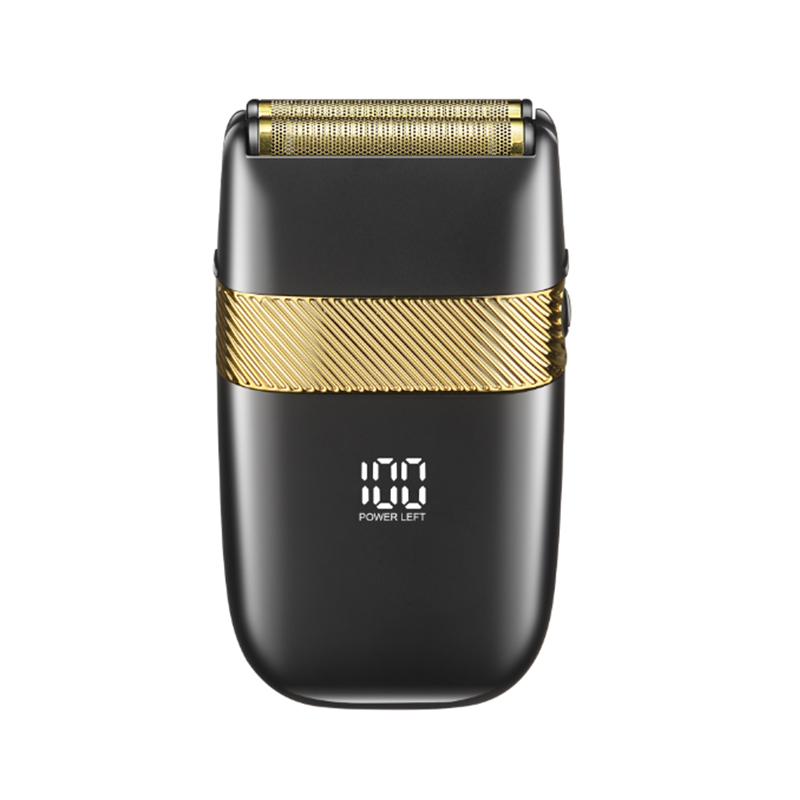
LT-865 Premium Gentleman Reciprocating Quick Charge Shaver
Product Overview
The LT-865 is a premium-style reciprocating electric shaver developed for facial grooming. It has a black ABS main body and a compact construction intended for convenient handling. The product is supplied in color box and blister small gift box packaging, which gives buyers more than one presentation option depending on the target market, retail channel, and branding strategy.
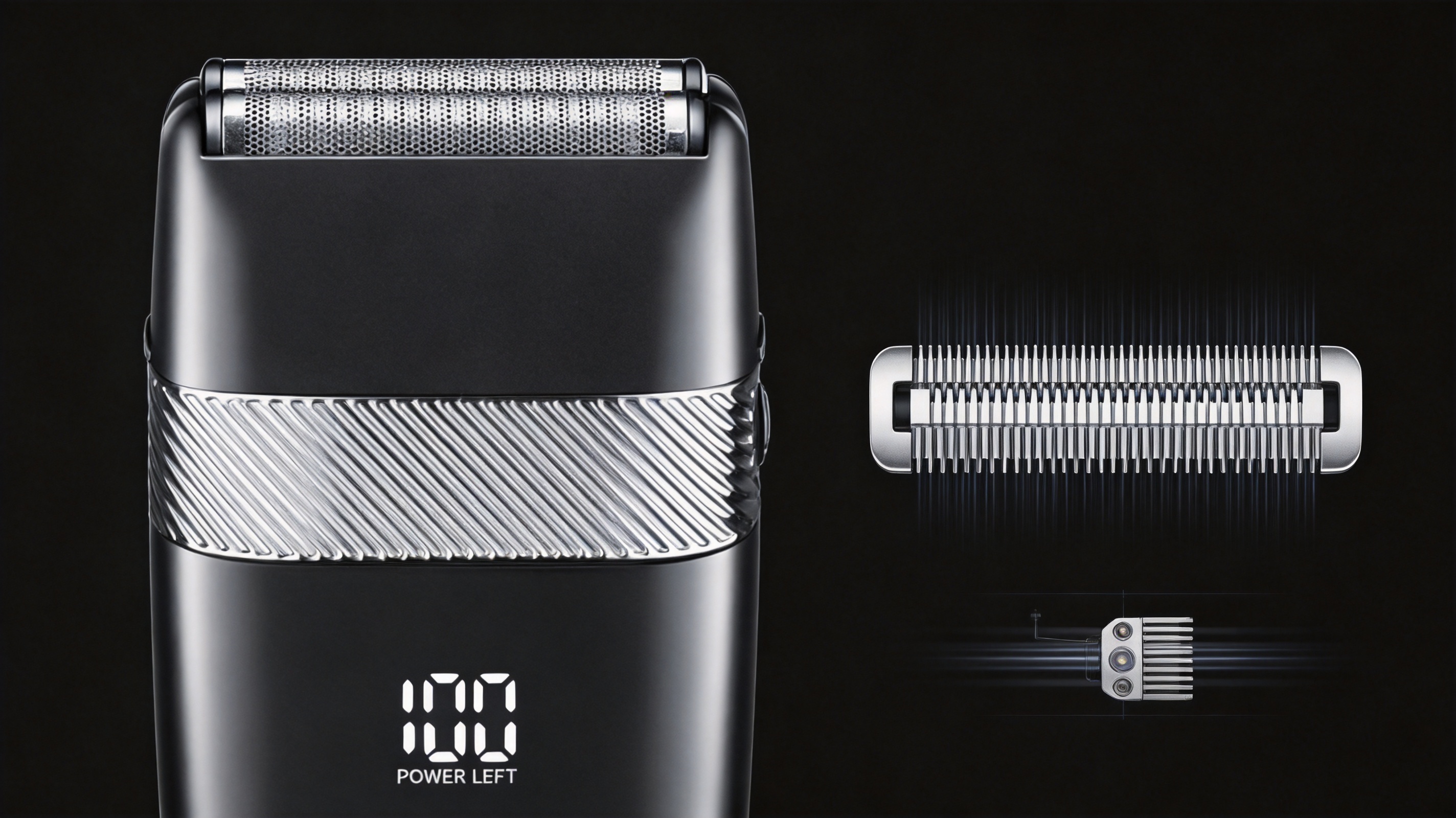
The shaver is equipped with an etched blade cutter head. Etching is a manufacturing method used to create or define precise cutting structures on a metal blade surface. In a reciprocating shaver, the blade moves rapidly back and forth while the user guides the device across the face. Compared with a simple fixed cutting element, a reciprocating system is designed to provide repeated cutting action across short strokes, making it suitable for removing facial hair efficiently when used with proper technique.
The internal power system uses a 14500 lithium battery rated at 600 mAh. The device charges through a USB port, and one USB cable is included in the package. The stated charging time is approximately two hours, while the listed discharge time is 70 minutes. The motor is rated at 3.2 volts and 8,300 RPM, with a total product power rating of 5 watts.
The package includes a cleaning brush and USB cable. These accessories are intentionally straightforward. A cleaning brush helps remove loose hair and debris from the cutter area, while the USB cable supports charging through a suitable USB power source. Keeping the accessory set focused can help maintain a competitive product cost while still providing the basic items needed for operation and routine care.
Key Specifications
| Item | Specification |
|---|---|
| Product model | LT-865 |
| Product category | Electric shaver |
| Device color | Black |
| Main body material | ABS |
| Cutter head | Etched blade |
| Battery model | 14500 / 600 mAh |
| Motor speed | 3.2 V, 8,300 RPM |
| Charging method | USB port |
| Charging time | Approximately 2 hours |
| Discharge time | Approximately 70 minutes |
| Power | 5 W |
| Included accessories | Cleaning brush and USB cable |
| Packaging | Color box and blister small gift box packaging |
These specifications place the LT-865 in a practical middle category. It is more capable than a basic low-power shaver intended only for occasional use, while remaining less complex than premium multi-head systems with extensive digital displays, multiple attachments, or advanced automatic cleaning stations. This can be an advantage for distributors seeking a straightforward product with fewer components that may require service or replacement.
Reciprocating Shaving Performance
The central performance feature of the LT-865 is its reciprocating cutter head. Reciprocating shavers use linear blade movement rather than the circular movement associated with rotary shavers. This design is commonly favored by users who prefer a direct shaving action and a narrow cutting surface that can be guided across the face in controlled strokes.
A reciprocating shaver is generally used by moving the cutter head against the direction of hair growth while keeping the device at a suitable angle to the skin. Short, steady strokes can help the blade engage facial hair without requiring excessive pressure. The user should avoid repeatedly pressing the device into the skin, since pressure does not necessarily improve cutting and may increase irritation.
The 8,300 RPM motor rating gives the LT-865 a defined operating profile. Motor speed supports blade movement and contributes to the consistency of the shaving action. In practical use, the result depends on more than the nominal RPM. Blade geometry, alignment, cutter-head construction, battery condition, facial-hair density, skin preparation, and user technique all affect the final experience. However, a properly matched motor and cutter head provide the foundation for stable operation.
The etched blade is another important element. Blade surfaces must be formed with sufficient precision to create a repeatable cutting edge and maintain appropriate interaction between moving and stationary parts. The etched construction supports the product’s premium positioning while helping distinguish it from very basic shavers that use less refined cutting components.
Advantages of the Cutter Configuration
One advantage of a reciprocating cutter head is its focused contact area. Users can guide the shaver around the cheeks, jawline, sideburns, and upper-lip area with relatively direct movement. This can be useful for people who want more control over the direction of shaving rather than the broader circular motion used by some rotary designs.
Another potential advantage is the straightforward mechanical layout. A focused cutter assembly can simplify daily operation because users do not need to select among multiple cutting heads or attachments. Fewer user-facing components can also make cleaning and replacement planning easier for distributors and service teams.
The LT-865’s cutter design may also appeal to buyers who prioritize speed and simplicity. The user can charge the unit, switch it on, and begin shaving without configuring a complex program. For retail products, this direct usability can reduce the amount of customer education required at the point of sale.
It is important to use realistic language when comparing the LT-865 with competing products. No shaver is ideal for every user, and performance may vary according to beard thickness, hair length, skin sensitivity, and shaving habits. The most credible product positioning is therefore based on specific features: reciprocating operation, etched blade construction, 8,300 RPM motor speed, USB charging, 70-minute listed runtime, and a compact accessory set.
Power, Battery, and Charging Convenience
The LT-865 uses a 14500-format 600 mAh rechargeable battery. This battery capacity is suited to a compact personal-care device because it supports cordless operation without requiring a large internal battery compartment. Cordless operation allows the user to shave without remaining close to a wall outlet, making the product convenient for bathrooms, bedrooms, offices, travel bags, and other everyday settings.
The listed discharge time is 70 minutes. Actual runtime can vary depending on motor load, hair density, operating habits, battery age, and storage conditions. Nevertheless, the stated figure provides a useful reference for retailers and end users. For many users, a 70-minute operating time can represent several shaving sessions between charges, particularly when the shaver is used for short daily grooming routines.
The charging time is approximately two hours. This creates a reasonable balance between battery size and recharge convenience. A user can charge the device during a regular daily routine, before travel, or overnight when appropriate safety practices are followed. Retailers can present the product as a rechargeable cordless shaver rather than a device dependent on continuous wired operation.
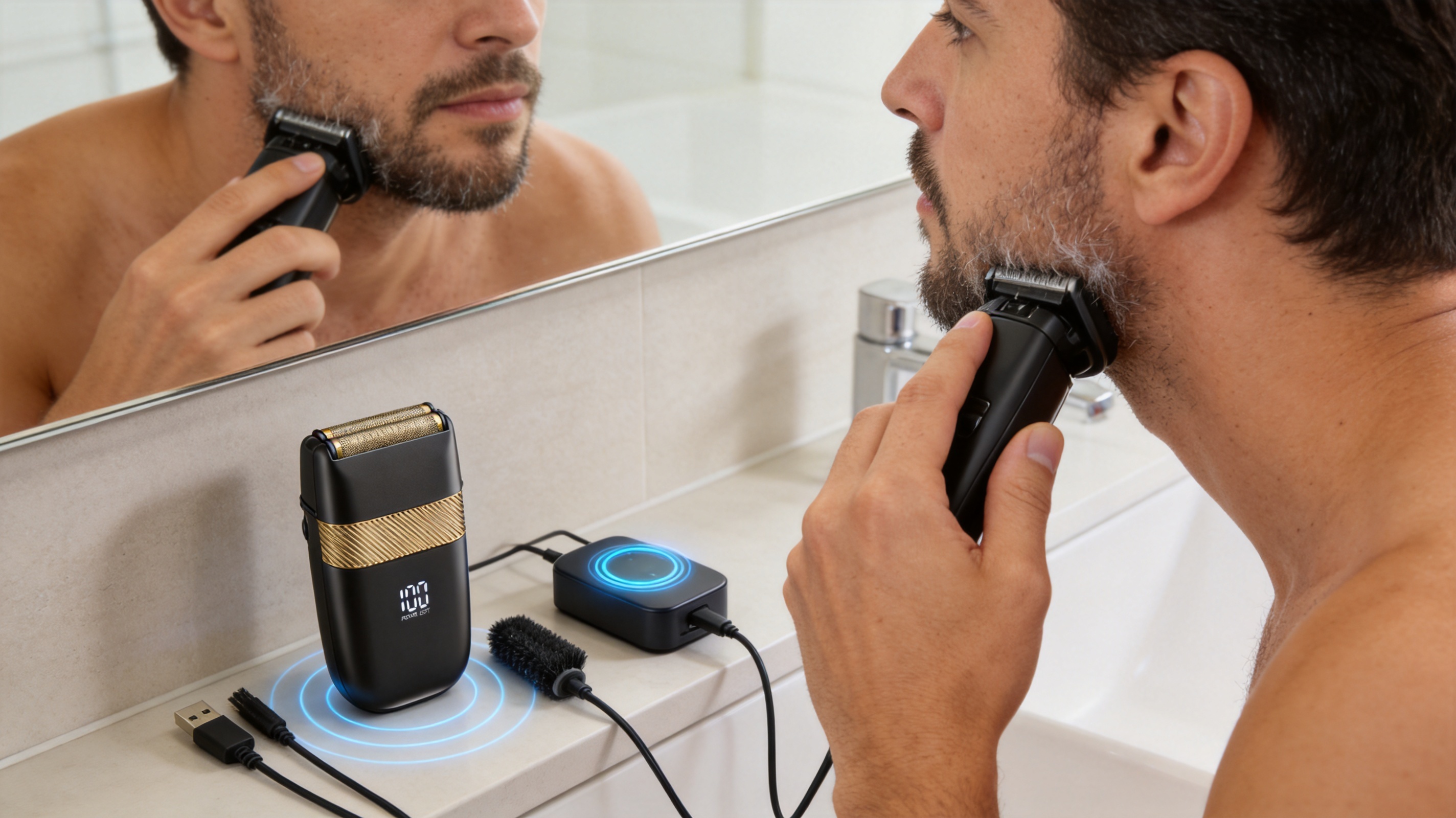
USB charging is one of the model’s practical advantages over shavers that rely on a proprietary mains charger. USB charging can be convenient for users who already have compatible adapters, computers, power banks, or travel charging equipment. It can also simplify logistics for distributors because the included cable is compact and easier to package than a larger dedicated adapter.
USB compatibility should still be explained carefully. Users should charge the shaver with a suitable, stable USB power source and follow the product’s operating instructions. They should not use damaged cables, expose the charging port to water, or continue using the device if the battery or housing shows signs of damage. Good charging practices help preserve battery performance and improve product safety.
Battery Value Compared with Basic Competitors
Some entry-level electric shavers are sold with very short operating times or with batteries that require frequent charging. The LT-865’s listed 70-minute discharge time gives it a more useful daily operating range. This can reduce charging frequency and improve the user’s perception of convenience.
The rechargeable design also creates a more modern product experience than disposable-battery shavers. Users do not need to keep replacement alkaline batteries available, and distributors can position the product as a reusable personal-care appliance. From a sustainability perspective, rechargeable operation may help reduce the number of disposable batteries consumed over the product’s service life, although the battery itself must eventually be handled through appropriate recycling channels.
For private-label buyers, the USB charging architecture may also be useful when developing a consistent accessory strategy across a product line. A company offering several grooming devices may be able to create a unified presentation around rechargeable USB products, subject to the specifications and certifications of each individual model.
Body Design and Handling
The main body is made from ABS, a widely used engineering thermoplastic known for its balance of impact resistance, rigidity, moldability, and cost efficiency. ABS is common in personal-care appliances because it can be formed into ergonomic housings with clean surfaces and integrated control features.
The black finish gives the LT-865 a restrained and professional appearance. Black personal-care devices are easy to coordinate with retail packaging, bathroom accessories, travel kits, and other grooming products. The neutral color may also appeal to a broad customer base and reduce the need for multiple stock-keeping units in the initial product launch.
Housing quality depends on more than the material name. The quality of the finished body is influenced by mold precision, injection parameters, material consistency, surface treatment, assembly alignment, and inspection standards. A well-designed ABS housing should support the internal motor and battery while maintaining a comfortable exterior shape and a secure relationship between the body and cutter head.
Compact handling is especially valuable for a reciprocating shaver. The user needs to control the direction and pressure of the cutter head across the face. A body that is too bulky can limit access around the nose, jawline, or sideburns, while a body that is too light or poorly balanced may feel unstable. The LT-865’s compact product concept is intended to support direct, controlled use.
Although the product is designed for personal grooming, it should not be treated as automatically waterproof unless the manufacturer specifically confirms a water-resistance rating. Users should keep the main body and charging port away from immersion and avoid rinsing the device unless the instructions expressly permit it. Dry cleaning with the included brush is an appropriate basic maintenance approach for the stated configuration.
Packaging and Retail Presentation
The LT-865 can be supplied in color box and blister small gift box packaging. This flexibility can serve different sales channels. A color box may provide a larger printable surface for product information, branding, instructions, and feature communication. Blister-style small gift box packaging can support compact display and may be suitable for promotional programs, convenience-oriented retail environments, or bundled gift campaigns.
Packaging is not only a visual element. It protects the device and accessories during handling, warehousing, and shipment. A well-planned package should hold the shaver securely, prevent unnecessary movement, present the included USB cable and cleaning brush clearly, and provide sufficient information for safe use.
For OEM and ODM customers, packaging flexibility can support market-specific adaptation. Buyers may request different languages, color schemes, barcode systems, warning information, instruction formats, or carton configurations. The feasibility of each change depends on order volume, tooling, printing requirements, regulatory needs, and the production schedule.
Maintenance and User Experience
Routine maintenance is essential for any electric shaver. Facial hair, skin oils, and dust can accumulate around the cutter head. If these materials are not removed, they may restrict blade movement, increase motor load, reduce cutting efficiency, and create an unpleasant user experience.
The included cleaning brush provides a simple way to remove loose hair after use. Users should switch off the shaver before cleaning, disconnect it from the charging source, and brush around the cutter head carefully. The cutter assembly should be handled gently because sharp components can cause injury if touched carelessly.
Cleaning frequency depends on usage. A person who shaves daily may benefit from brushing the cutter head after each session or at least several times per week. Occasional users should clean the unit after use and before storing it for a long period. The device should be stored in a dry environment away from excessive heat, moisture, and direct sunlight.
Blade condition is also important. Even a high-speed motor cannot compensate indefinitely for worn, damaged, or improperly aligned cutting elements. Retailers and distributors should provide clear maintenance guidance and, where applicable, establish a replacement-parts strategy. Proper use and care may extend product life and reduce unnecessary complaints.
The simplicity of the LT-865 accessory package can be beneficial in this respect. The user receives the two items most directly associated with everyday operation: a cleaning brush and a charging cable. A smaller accessory set can reduce confusion and make the product easier to explain, particularly for first-time electric-shaver users.
Competitive Positioning
The electric-shaver market includes basic foil shavers, rotary shavers, multi-head systems, travel shavers, premium smart devices, and low-cost private-label products. The LT-865 is best positioned as a compact reciprocating shaver that emphasizes direct operation, rechargeable convenience, and practical construction.
Compared with a very basic low-cost shaver, the LT-865 offers a more clearly defined product package. Its etched blade, 8,300 RPM motor, 600 mAh rechargeable battery, USB charging, 70-minute listed discharge time, cleaning brush, and gift-style packaging provide multiple points of differentiation. These features can support stronger product descriptions and a more complete retail presentation.
Compared with highly complex premium shavers, the LT-865 may offer a simpler ownership experience. It does not depend on a large number of attachments, electronic programs, or a separate cleaning station in the listed configuration. A simpler product can be easier to stock, easier to explain, less expensive to package, and more accessible to users who want efficient grooming without unnecessary complexity.
Compared with rotary shavers, the LT-865 appeals to users who prefer reciprocating movement. The choice between reciprocating and rotary technology is personal, and both categories have loyal users. The model’s competitive strength is therefore not that one system is universally superior, but that it offers a focused alternative for consumers who prefer linear blade action and controlled facial contact.
Compared with corded-only shavers, the LT-865 provides cordless flexibility. Compared with disposable-battery devices, it offers rechargeable operation. Compared with products with proprietary charging accessories, the USB cable can provide a more convenient travel and replacement experience. These distinctions are particularly relevant in modern retail, where portability and charging convenience frequently influence purchase decisions.
Competitive Feature Comparison
| Evaluation Area | LT-865 Positioning | Potential Customer Benefit |
|---|---|---|
| Cutting system | Reciprocating etched blade | Direct shaving action and focused control |
| Motor | 3.2 V, 8,300 RPM | Consistent blade movement for daily grooming |
| Battery | 14500 / 600 mAh rechargeable battery | Cordless use without frequent disposable-battery replacement |
| Runtime | Approximately 70 minutes | Multiple grooming sessions between charges |
| Charging | USB port with cable included | Convenient charging for home and travel |
| Maintenance | Cleaning brush included | Simple removal of hair and debris |
| Housing | Black ABS body | Lightweight, durable, and broadly appealing appearance |
| Packaging | Color box and blister small gift box options | Flexible retail, promotional, and private-label presentation |
When comparing products, buyers should avoid relying solely on a single specification such as motor speed or battery capacity. Overall value comes from the interaction of the motor, blade, housing, battery, charging system, manufacturing consistency, packaging, and support. The LT-865’s advantage is the way these elements form a coherent product concept rather than an isolated collection of numbers.
Manufacturing Capabilities
The manufacturer, Yuyao Laituo Electric Appliance Co., Ltd., is based in Yuyao Industrial Park in Ningbo, China. Yuyao is widely associated with mold manufacturing and has access to a developed local electronics and appliance supply chain. This location can support sourcing, tooling, component coordination, assembly, testing, and logistics for personal-care electrical products.
The company focuses on hair clippers, electric shavers, and body trimmers. Its product scope is relevant to the LT-865 because manufacturing expertise in adjacent grooming categories can support shared knowledge in motors, rechargeable batteries, cutter assemblies, plastic housings, switches, charging ports, packaging, and safety testing.
The company is described as integrating research and development, production, and sales. This integrated structure can reduce communication gaps between design and manufacturing. When engineering, production, and commercial teams work within a coordinated system, product adjustments can be evaluated more efficiently, especially when customers request changes to the appearance, accessories, packaging, or electrical configuration.
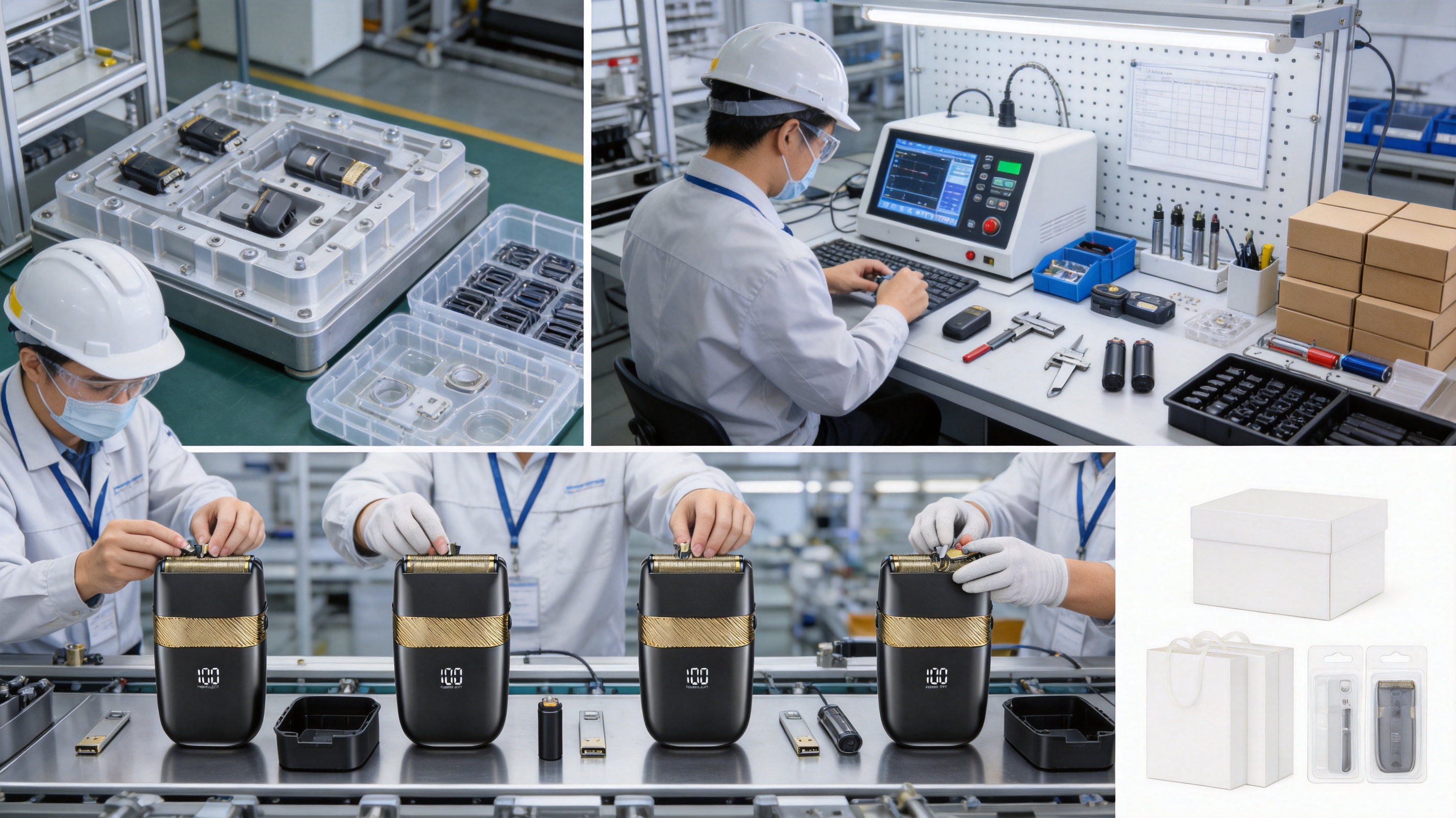
The stated facility covers approximately 1,000 square meters and includes nearly 100 employees, automated production lines, and precision testing equipment. Facility size alone does not determine product quality, but a combination of personnel, automation, and testing infrastructure can create a more organized platform for repeat production.
Research and Development
Research and development is essential in electric grooming products because the user experience depends on the relationship between mechanical, electrical, and ergonomic elements. Engineers must consider cutter geometry, motor output, battery capacity, charging behavior, housing structure, operating noise, heat generation, and ease of cleaning.
For the LT-865, development work includes matching the reciprocating blade system with the 8,300 RPM motor and the 600 mAh battery. The motor must provide suitable movement while remaining compatible with the available power supply. The battery must support the intended operating period while fitting safely inside the ABS housing. The charging circuit must work with the USB input and protect the battery during normal charging conditions.
Product development also includes physical design. The body must accommodate the motor, battery, circuit components, charging port, switch, and cutter connection. Internal parts must be arranged so that the product can be assembled consistently and serviced or inspected when necessary. External surfaces should be formed with suitable tolerances to support clean appearance and reliable fit.
For OEM and ODM customers, an experienced development team can help transform a general concept into a production-ready device. Customers may begin with a target price, market segment, color requirement, packaging idea, or feature list. The manufacturer can then evaluate the technical feasibility, tooling implications, component availability, minimum order quantities, and expected lead time.
Tooling and Plastic Housing Production
The ABS body requires a suitable injection mold. Mold quality affects part dimensions, surface appearance, assembly fit, and repeatability. A precision mold can help produce consistent housings across production batches, while suitable gate design, cooling channels, and ejection arrangements can reduce visible defects and improve cycle efficiency.
Yuyao’s reputation as a center for mold manufacturing can be valuable in this area. Local access to tooling resources may facilitate communication between product engineers and mold specialists. It can also make it easier to evaluate design changes, correct fit issues, refine surface details, and coordinate prototype development.
Plastic injection production must be managed carefully. Material drying, temperature settings, injection pressure, cooling time, and mold maintenance can all influence the final part. Quality-control personnel may inspect housings for scratches, deformation, short shots, flash, color inconsistency, and assembly-related dimensional problems.
A stable plastic-housing process is particularly important for private-label products. Customers expect every unit to have the same appearance and fit, especially when the product is sold under a consistent brand identity. Reproducible molding supports that expectation and reduces the risk of inconsistent retail presentation.
Automated Assembly
Automated production lines can improve consistency in repetitive operations. Depending on the specific process, automation may support component placement, screw fastening, electrical connection, functional activation, labeling, or packaging. Automation does not eliminate the need for skilled personnel; rather, it provides repeatable support for tasks that benefit from controlled positioning and standardized timing.
In a shaver, assembly accuracy matters because the motor, cutter head, battery, charging port, and housing must work together. A motor that is not positioned correctly may create excess vibration or noise. A poorly fitted cutter connection may reduce shaving performance. A battery or cable connection that is not properly secured may create reliability concerns. Standardized assembly procedures help reduce these risks.
Production workers and inspectors remain important for tasks that require visual judgment, process supervision, and exception handling. A balanced manufacturing system combines automated equipment with trained staff who understand the product structure and quality requirements.
Testing and Quality Assurance
Precision testing equipment supports the evaluation of electrical and mechanical characteristics. Testing may include power-on verification, charging checks, motor operation, cutter movement, battery behavior, appearance inspection, and packaging confirmation. The exact test program should correspond to the product design, applicable standards, customer requirements, and production stage.
For the LT-865, functional checks can help confirm that the USB charging system operates correctly, the motor starts normally, the cutter head moves as intended, and the external housing is assembled properly. Battery-related inspections are also important because rechargeable devices require attention to charging behavior, connection quality, and protection circuitry.
Quality assurance should be viewed as a process rather than a single final inspection. Incoming components can be checked before assembly, production steps can be monitored during manufacture, and completed products can be tested before shipment. This layered approach can identify problems earlier and reduce the likelihood that defects continue through the production line.
Documentation is another important element. Production records, inspection standards, sampling results, corrective actions, and shipment checks can help create traceability. For overseas customers, clear documentation supports communication and provides a basis for discussing quality expectations, product revisions, and recurring issues.
Certifications and Export Readiness
The company states that its products have passed CE and RoHS certifications. These certifications and compliance frameworks are relevant to international sales, although the exact applicability should always be confirmed for the specific model, target country, configuration, and current regulatory requirements.
CE-related compliance generally concerns applicable European market requirements, while RoHS addresses restrictions on certain hazardous substances in electrical and electronic equipment. Compliance is not a substitute for quality control, but it can support importer evaluation and market-entry planning.
The company also has independent export rights and sells products to more than 30 countries and regions, including markets in Europe, America, and South America. International experience can help a manufacturer understand export packaging, documentation, labeling, communication across time zones, and the commercial expectations of overseas buyers.
Importers should still conduct their own due diligence. They may need to review test reports, declarations, technical files, battery transport documentation, labeling requirements, warranty terms, and local electrical regulations. Product compliance can vary by destination, and responsibility may be shared between the manufacturer, importer, distributor, and brand owner.
OEM and ODM Opportunities
The LT-865 can serve as a finished product for distributors, or it can function as a platform for private-label development. OEM customers may request their own logo, packaging, instruction manual, color scheme, barcode, or retail presentation. ODM customers may seek deeper changes to the design, product configuration, accessories, or feature set.
Customization should be evaluated systematically. A logo change may involve printing, laser marking, embossing, or a decorative label. Each method has different costs, durability characteristics, minimum order quantities, and approval requirements. Packaging changes may require new artwork, printing plates, prototypes, and carton testing. Color changes may require material matching and sample approval.
More substantial changes can include a revised housing, a different battery, an alternative charging configuration, modified cutter-head styling, or an updated switch design. Such projects may require engineering review, mold modification, electrical validation, reliability testing, and new compliance documentation.
A capable OEM/ODM partner should explain which changes are simple, which require tooling, and which may affect cost or lead time. Clear communication at the beginning of a project helps prevent misunderstandings later. It also allows the buyer to make practical decisions based on market demand and expected order volume.
The LT-865’s relatively focused configuration can be useful for brands that want a clear product message. Rather than presenting a confusing list of unnecessary features, a private-label customer can emphasize reciprocating shaving, rechargeable USB operation, 70-minute listed runtime, compact black ABS construction, and included maintenance accessories.
Benefits for Distributors and Retailers
Distributors often need products that are easy to categorize, explain, display, and replenish. The LT-865 fits naturally within electric shavers and men’s personal-care appliances. Its feature list is understandable to sales teams and end users, and its packaging options can support different channels.
Retailers may value the product’s balance between visible features and operational simplicity. The black housing and gift-style packaging can provide a premium impression, while the USB cable and cleaning brush communicate practical value. The product can be positioned for everyday grooming, travel, seasonal gifting, or inclusion in broader personal-care assortments.
Online sellers can also build product pages around measurable specifications. Accurate descriptions can mention the 8,300 RPM motor, 600 mAh battery, two-hour charging time, 70-minute discharge time, etched blade, USB port, ABS body, and included accessories. Clear information helps reduce unsuitable purchases and sets realistic expectations.
Recommended Use and Care
Before the first use, the customer should inspect the shaver, cutter head, housing, charging port, and cable. The unit should be charged according to the instructions using a suitable USB power source. If any component appears damaged, the shaver should not be operated until the issue has been assessed.
For shaving, the user should prepare clean, dry skin unless the instructions for the specific version state otherwise. Holding the device at a comfortable angle, the user can move it in short, controlled strokes against the direction of hair growth. Excessive pressure should be avoided. Areas such as the jawline and upper lip may require slower movement because hair direction and facial contours change across the face.
After use, the shaver should be switched off. Loose hair can be removed with the cleaning brush. The cutter head should not be struck against a hard surface, and sharp cutting components should not be handled carelessly. The product should be stored in a clean, dry location and kept away from children when not in use.
Users should not attempt unauthorized modifications to the battery, motor, charging circuit, or cutter assembly. Opening the housing may create safety risks and can affect warranty coverage. Repairs should be handled by qualified personnel or through the manufacturer’s approved service process.
These recommendations are general guidance. The final user manual supplied with the product should take priority because it may include model-specific instructions, warnings, charging requirements, and cleaning limitations.
Quality, Reliability, and Customer Confidence
Customer confidence is built through consistent performance over time. For an electric shaver, reliability includes more than whether the motor starts on the first day. It also includes stable charging, secure housing fit, dependable cutter movement, reasonable battery retention, accessory completeness, and resistance to ordinary handling.
Manufacturing discipline contributes directly to these outcomes. Correct component sourcing reduces variation. Accurate molding supports assembly. Standardized motor and battery installation helps maintain performance. Functional testing identifies units that do not operate as expected. Careful packaging reduces transport damage. Together, these steps support a more dependable product experience.
The company’s combination of automated production lines and precision testing equipment is relevant to this goal. Automation can increase repeatability in high-volume operations, while testing equipment provides objective information about product function. Skilled personnel are still essential for supervision, inspection, process improvement, and customer communication.
Continuous improvement is also important. Feedback from distributors, retailers, service teams, and end users can reveal opportunities to improve packaging, instructions, ergonomics, cleaning access, battery behavior, or component durability. A manufacturer that integrates feedback into product development can strengthen future versions and maintain a more competitive range.
Why the LT-865 Is a Strong Practical Choice
The LT-865 stands out through balance rather than unnecessary complexity. It combines a reciprocating etched blade with an 8,300 RPM motor, a 600 mAh rechargeable battery, USB charging, a listed 70-minute discharge time, and a black ABS body. The package includes a cleaning brush and USB cable, while the packaging format can support both retail and gift-oriented presentation.
Its advantages over basic competitors are specific and easy to communicate. The product offers cordless operation, rechargeable convenience, a defined motor specification, an etched cutter head, and a runtime that can support multiple grooming sessions. Its simple configuration may also be easier to operate and maintain than products with many attachments or complex accessories.
Its advantages for commercial buyers extend beyond the product specifications. The manufacturer has experience in personal-care electrical appliances, access to a local mold and electronics supply chain, integrated R&D and production capabilities, automated lines, precision testing equipment, international export experience, and OEM/ODM support.
For a retailer, these strengths can translate into a product that is easier to present and position. For a distributor, they may support stable sourcing and portfolio development. For a private-label brand, they may provide a foundation for packaging customization, visual identity, and market-specific product planning.
Q&A
What type of shaver is the LT-865?
The LT-865 is a reciprocating electric shaver. It uses an etched blade cutter head that operates through rapid linear movement and is intended for facial grooming.
What is the motor speed?
The motor is rated at 3.2 volts and 8,300 RPM. Actual performance also depends on the cutter assembly, battery condition, hair type, skin preparation, and user technique.
How long does the battery operate?
The listed discharge time is approximately 70 minutes. Actual runtime may vary according to operating load, usage frequency, battery age, and storage conditions.
How long does charging take?
The stated charging time is approximately two hours. The shaver charges through a USB port, and one USB cable is included.
What battery does the product use?
The product uses a 14500-format rechargeable battery rated at 600 mAh.
What material is used for the main body?
The main body is made from ABS. This material is commonly used in personal-care appliances because it supports molded housing designs and offers a practical balance of rigidity, impact resistance, and manufacturing efficiency.
What accessories are included?
The package includes a cleaning brush and a USB charging cable.
Can the shaver be washed under water?
The supplied specifications do not state a waterproof or water-resistance rating. Users should not rinse or immerse the shaver unless the official instructions for the specific version expressly permit it. Dry cleaning with the included brush is the safer general approach.
Is the product suitable for private labeling?
The manufacturer provides OEM/ODM solutions, so private-label customers can discuss logo application, packaging, color, documentation, and other customization options. The available changes, minimum order quantities, costs, and lead times should be confirmed for each project.
What kind of packaging is available?
The stated packaging method is color box plus blister small gift box packaging. Buyers should confirm the preferred packaging format, artwork requirements, language options, and carton specifications before production.
What makes the LT-865 different from a basic entry-level shaver?
It combines a reciprocating etched blade, an 8,300 RPM motor, a rechargeable 600 mAh battery, USB charging, a listed 70-minute discharge time, and included cleaning accessories. These features create a more complete and marketable configuration than a very basic low-power device.
Who manufactures the product?
The product is manufactured by Yuyao Laituo Electric Appliance Co., Ltd., a personal-care electrical appliance company based in Yuyao Industrial Park, Ningbo, China.
What products does the manufacturer produce?
The company focuses on hair clippers, electric shavers, and body trimmers, and its broader product category also includes grooming devices such as nose hair trimmers.
Does the manufacturer support international customers?
The company has independent export rights and states that its products are sold in more than 30 countries and regions. International buyers should still confirm the documentation and compliance requirements for their particular destination market.
What certifications are associated with the products?
The company states that its products have passed CE and RoHS certifications. Buyers should request the relevant model-specific documentation and verify that the certification scope matches the intended market and product configuration.
Conclusion
The LT-865 Premium Gentleman Reciprocating Quick Charge Shaver offers a balanced solution for users and businesses seeking a practical electric grooming device. Its reciprocating etched blade, 8,300 RPM motor, rechargeable 600 mAh battery, USB charging system, 70-minute listed discharge time, black ABS body, cleaning brush, and USB cable form a coherent product package.
Its competitive value comes from useful, clearly defined features rather than excessive complexity. The product is designed to provide direct shaving operation, cordless convenience, manageable maintenance, and flexible retail presentation. It can appeal to consumers who prefer reciprocating shaving technology and to commercial buyers who need a product that is easy to explain, package, distribute, and customize.
The manufacturing foundation adds further value. Yuyao Laituo Electric Appliance Co., Ltd. combines personal-care product expertise with R&D, production, automated assembly, precision testing, export capability, and OEM/ODM support. Its location in Yuyao provides access to a mature mold and electronic manufacturing ecosystem, while its stated CE and RoHS certification experience supports international product planning.
For distributors and private-label brands, the LT-865 can serve as a reliable starting point for a competitive electric-shaver offering. As with any electrical appliance, buyers should confirm the final specifications, testing documents, packaging details, warranty conditions, compliance requirements, and customization terms before placing an order. With appropriate quality control and accurate product communication, the model can support a strong position in the everyday personal-grooming market.
References
1. Product specification sheet for the LT-865 Premium Gentleman Reciprocating Quick Charge Shaver, including motor, battery, charging, cutter-head, packaging, and accessory information.
2. Manufacturer profile for Yuyao Laituo Electric Appliance Co., Ltd., including company capabilities, product categories, facility information, export experience, and OEM/ODM services.
3. General principles of electric-shaver design, including reciprocating cutter operation, motor and blade interaction, battery-powered appliance construction, and user maintenance practices.
4. General guidance on ABS injection-molded housings for personal-care electrical appliances.
5. General compliance references concerning CE marking, RoHS requirements, rechargeable battery safety, and electrical appliance export preparation.
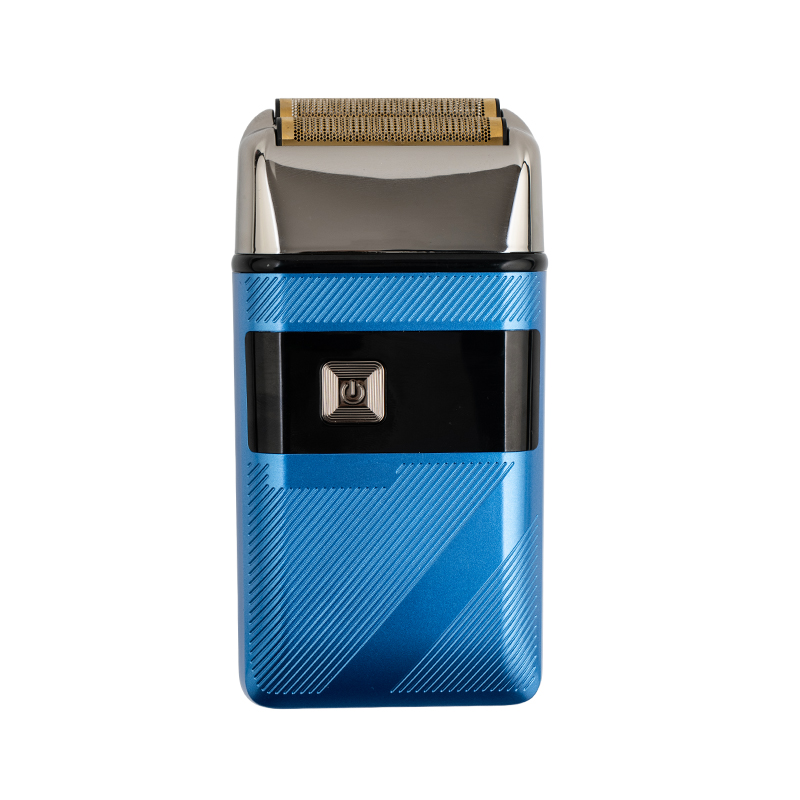
Product: LT-865 Premium Gentleman Reciprocating Quick Charge Shaver

+86-574-62151741
+86-13655842900
laituo@google.com
No. 22 Liufang Road, Yuyao Industrial Park, Ningbo City, China
Copyright © Yuyao Laituo Electric Appliance Co., Ltd. All Rights Reserved
OEM/ODM Hair Removal Tool Epilator Manufacturers
