
 русский
 Français
 Español
 Deutsch
 عربى
عربى
Precision Blade Hair Clipper: Performance, Flexibility, and OEM/ODM Manufacturing Strength
Introduction
Modern consumers expect more from a hair clipper than simple cutting performance. A successful grooming device must combine reliable power, comfortable handling, sharp and durable blades, convenient charging, useful accessories, and a design that suits both personal and professional use. For distributors, retailers, barbershop suppliers, and private-label brands, the product must also support consistent manufacturing, attractive packaging, flexible customization, and dependable quality control.
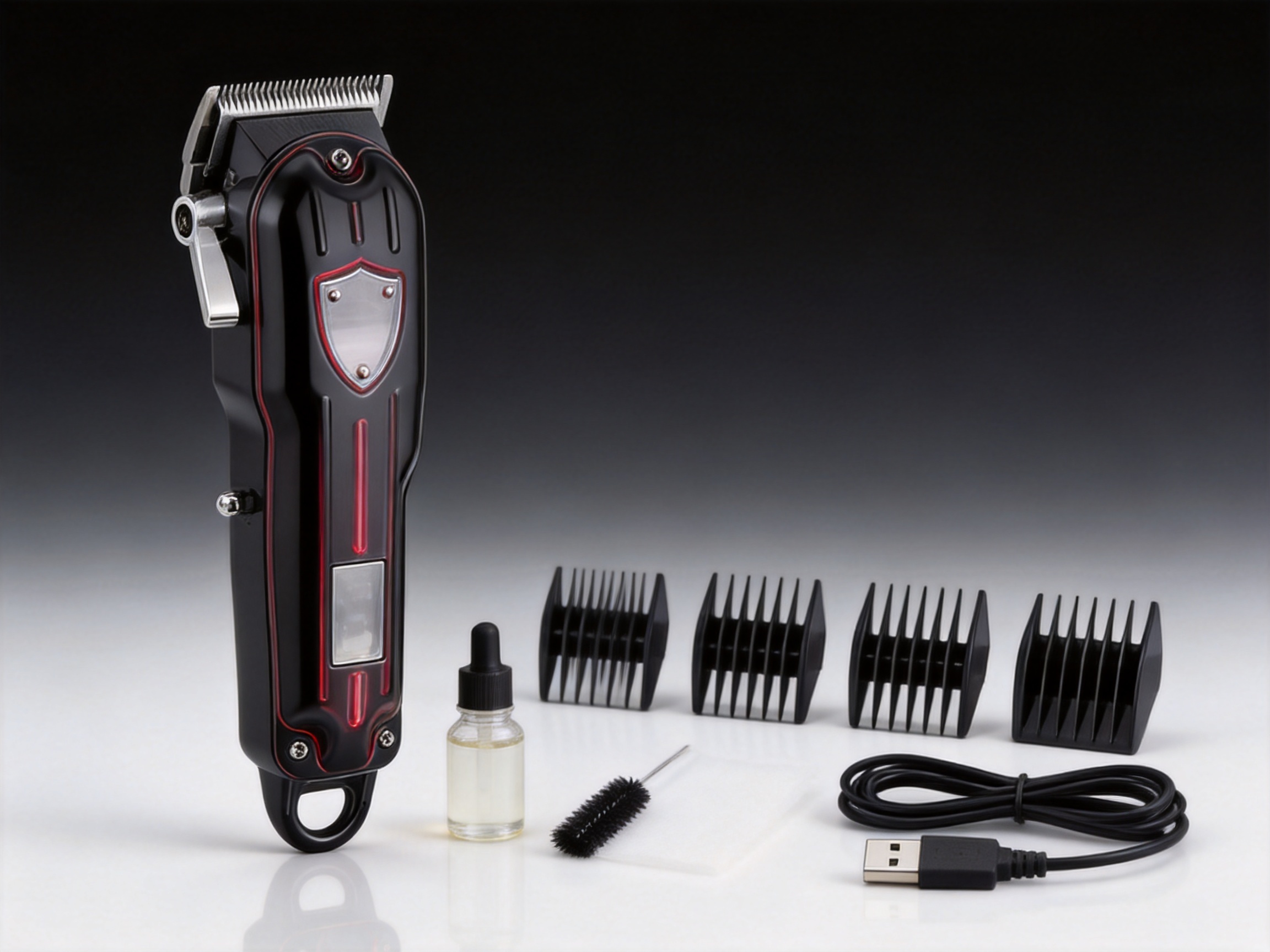
The LT-1258 Precision Blade Hair Clipper is designed to address these requirements through a balanced combination of cutting performance, cordless convenience, practical accessories, and manufacturing flexibility. Its core configuration includes a powder metallurgy blade, a 3.2-volt motor rated at 7,200 revolutions per minute, a rechargeable 18650 lithium battery option, USB charging, and four comb attachments. The clipper is available in black, red, and transparent body colors, enabling buyers to select a visual style appropriate for different markets and customer groups.
Behind the product is Yuyao Laituo Electric Appliance Co., Ltd., a personal care appliance manufacturer specializing in hair clippers, electric shavers, body groomers, and related grooming equipment. The company combines product development, manufacturing, assembly, testing, export, and OEM/ODM support within one operating structure. Its location in Yuyao, a region recognized for mold-making and manufacturing capabilities, gives it access to a mature industrial supply chain and experienced technical resources.
This article examines the design, technical configuration, user benefits, competitive advantages, manufacturing process, customization potential, quality approach, and commercial applications of the LT-1258 Precision Blade Hair Clipper. It also explains why a product of this type can be a valuable addition to a private-label grooming portfolio.
LT-1258 Precision Blade Hair Clipper
Product Overview
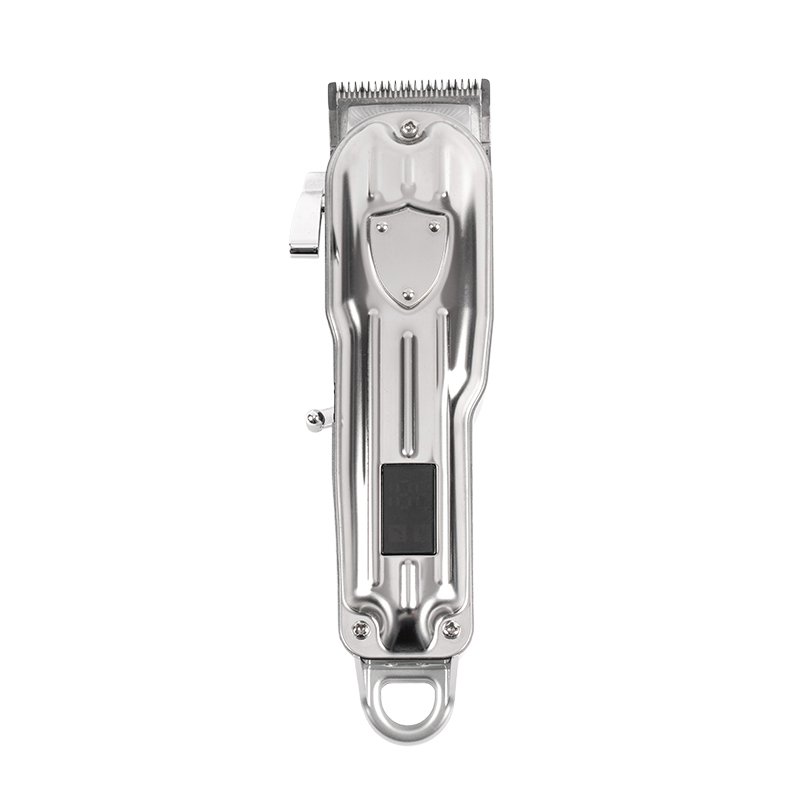
The LT-1258 is a precision-oriented electric hair clipper developed for trimming and haircutting applications. It is positioned within the electric hair clipper category, while its compact rechargeable format also makes it suitable for home grooming, travel, barbershop use, and personal care product distribution.
The clipper uses an ABS body. ABS is widely used in personal care appliances because it offers a useful balance of strength, impact resistance, low weight, and molding flexibility. A well-designed ABS housing can support comfortable handling without making the product unnecessarily heavy. It also allows manufacturers to create smooth contours, textured grip areas, color combinations, and transparent visual effects that improve shelf appeal.
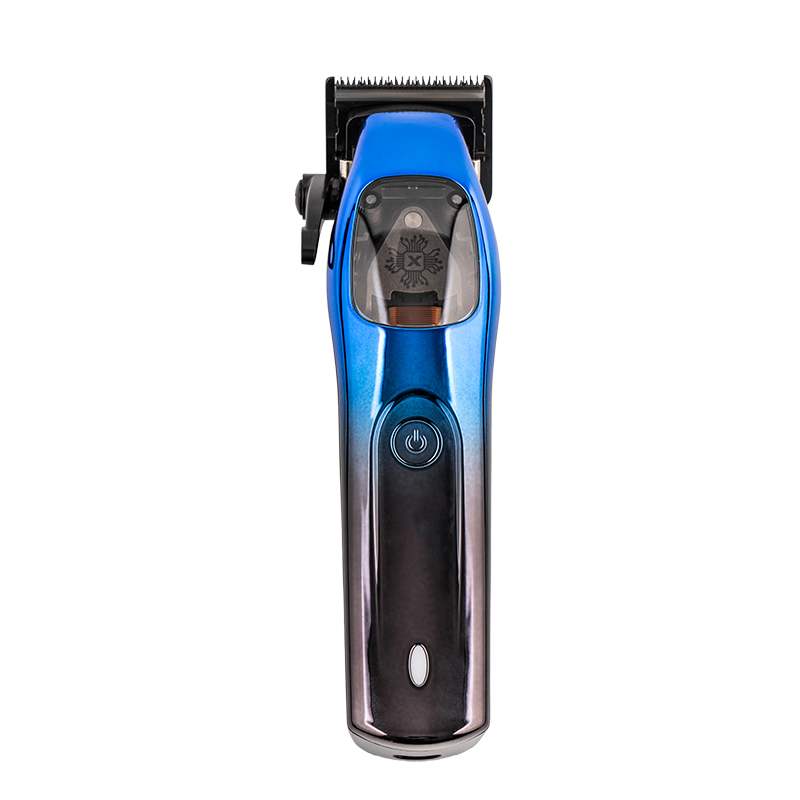
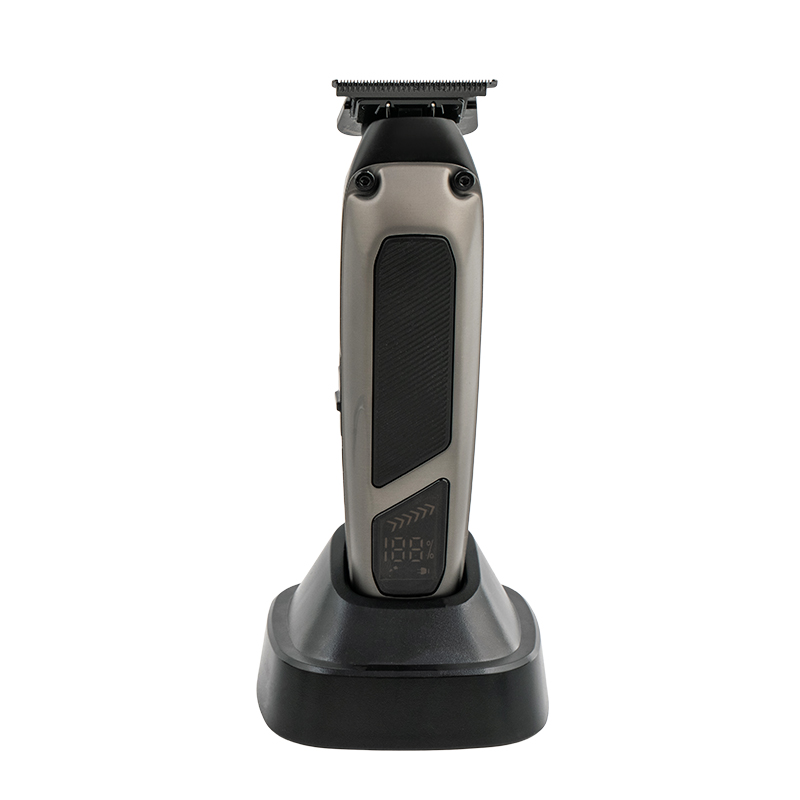
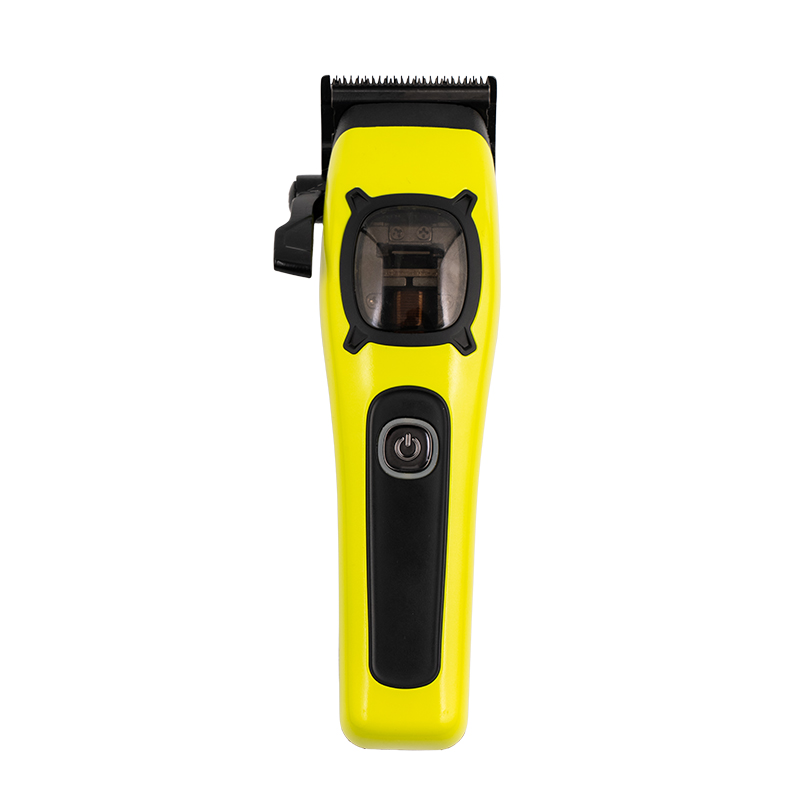
The available body colors are black, red, and transparent. Black provides a classic and professional appearance that is suitable for barber tools, men’s grooming collections, and premium-looking private-label products. Red creates a more energetic and distinctive visual identity, which may appeal to younger consumers or brands seeking stronger shelf visibility. Transparent housing elements can highlight internal components or create a modern technology-oriented appearance.
Inside the clipper, the powder metallurgy blade is designed to support efficient cutting and long-term wear resistance. Blade quality is one of the most important factors in the performance of any hair clipper. A blade must maintain a clean cutting edge, move smoothly, and work effectively with the selected motor and comb attachments. Powder metallurgy is a manufacturing method that can produce metal components with consistent dimensions and suitable structural properties for grooming applications.
The product is powered by a 3.2-volt motor operating at 7,200 revolutions per minute. This speed provides the mechanical movement needed for regular haircutting and trimming tasks. The motor configuration is intended to deliver a balance between cutting efficiency, operating stability, and practical energy use. The 5-watt power rating further identifies the clipper as a compact personal care appliance rather than a high-consumption professional machine.
A rechargeable 18650 battery is included in the configuration, with stated capacity options of 1,500 mAh and 2,000 mAh. These capacity choices allow buyers to select a battery configuration according to target price, runtime expectations, product positioning, and market requirements. The clipper supports USB charging and is supplied with one USB cable, making it compatible with many common power sources such as adapters, computers, power banks, and vehicle charging ports.
The stated charging time is 2.5 hours or 3.5 hours, depending on the selected battery configuration and product specification. The stated discharge time is up to 150 minutes. Actual performance may vary according to battery capacity, hair thickness, cutting resistance, operating conditions, and product configuration. Even so, a long cordless operating period can reduce interruptions and make the clipper convenient for both household users and professional operators.
Key Technical Specifications
| Specification | Details |
|---|---|
| Product Name | LT-1258 Precision Blade Hair Clipper |
| Product Category | Electric Hair Clippers |
| Body Material | ABS |
| Available Body Colors | Black, red, and transparent |
| Blade Material and Type | Powder metallurgy blade |
| Motor Speed | 3.2 V, 7,200 RPM |
| Power Rating | 5 W |
| Battery Model | 18650 lithium battery |
| Battery Capacity Options | 1,500 mAh or 2,000 mAh |
| Charging Method | USB interface |
| Charging Accessory | One USB cable |
| Charging Time | Approximately 2.5 hours or 3.5 hours, depending on configuration |
| Stated Discharge Time | Up to 150 minutes |
| Included Accessories | Oil bottle, cleaning brush, four comb attachments, and USB cable |
| Packaging | Color box with blister small gift box packaging |
Precision Cutting Performance
Powder Metallurgy Blade Construction
The blade is the working heart of a hair clipper. Even a powerful motor cannot compensate for a poorly engineered blade. The LT-1258 uses a powder metallurgy blade, a material approach that supports consistent production and suitable hardness for repeated cutting applications.
Powder metallurgy involves forming metal components from processed metal powders under controlled pressure and heat. This process can help manufacturers achieve repeatable shapes and dimensions while supporting efficient production of precision parts. In a clipper, consistent blade geometry is important because the moving and stationary components must work together closely. Variations can affect cutting smoothness, noise, vibration, and hair-pulling performance.
For importers and private-label buyers, consistent blade production can be especially important. Products sold under one brand must maintain similar performance from one production batch to the next. A stable blade manufacturing process helps reduce variation and supports more predictable quality inspection.
Designed for Everyday Haircutting and Trimming
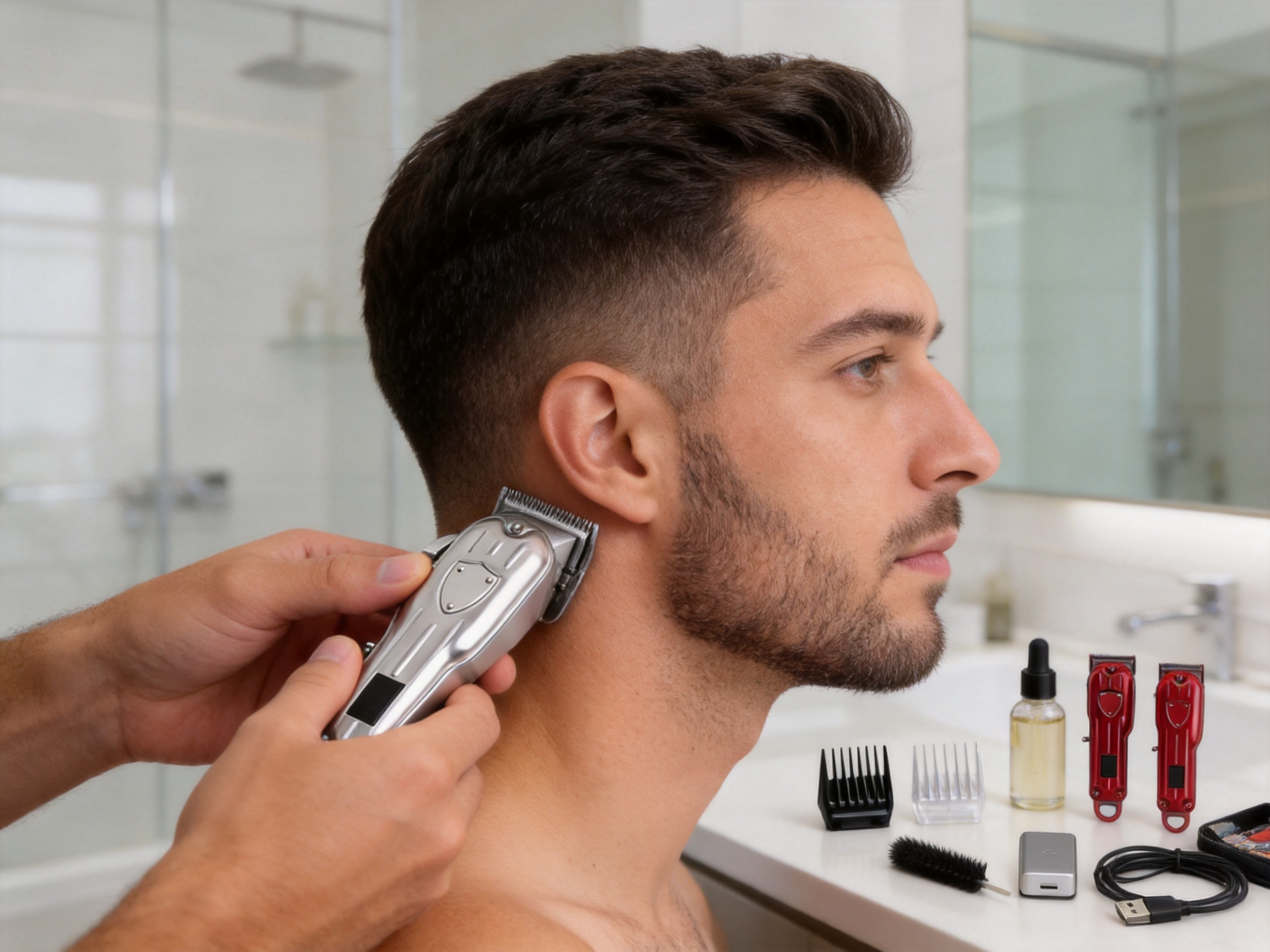
The LT-1258 can be used for routine haircutting, sideburn trimming, neckline cleanup, beard-edge maintenance, and general personal grooming. The four comb attachments provide different cutting-length options, allowing the user to create a range of styles without purchasing separate devices.
Comb attachments also help users control the distance between the blade and the hair. This is useful for beginners who may prefer a more guarded cutting method, as well as experienced users who need different lengths during one grooming session. The supplied accessories expand the usefulness of the main unit and help the product appear more complete when presented in retail packaging.
Compared with a basic clipper sold without attachments, a multi-accessory kit can provide stronger perceived value. It gives consumers more functionality at the point of purchase and can reduce the need to buy additional accessories separately. For retailers, this can simplify product presentation because the package communicates that the clipper is a complete grooming solution.
Motor Performance and Operating Efficiency
The LT-1258 uses a 3.2-volt motor rated at 7,200 RPM. Motor speed affects how quickly the moving blade travels across the stationary blade. A suitable speed can help the clipper handle hair efficiently while supporting a smooth user experience.
The 7,200 RPM specification places the product in a performance-oriented category for everyday consumer grooming. It is intended to provide responsive cutting action without relying on an oversized motor or a high power requirement. The 5-watt rating supports a compact design and may help the clipper maintain a practical balance between power consumption, operating time, and portability.
In real use, cutting performance is influenced by several factors beyond the advertised motor speed. These include blade alignment, lubrication, hair density, hair moisture, comb attachment selection, battery charge level, and the pressure applied by the user. This is why the product includes an oil bottle and cleaning brush. Regular care helps keep the blade assembly operating smoothly and can contribute to consistent performance over time.
Many competing products in the entry-level and mid-range markets focus on appearance while providing limited maintenance accessories. Including both oil and a brush strengthens the practical value of the LT-1258. It also encourages users to follow a basic care routine, which can help extend the service life of the cutting system.
Rechargeable Cordless Convenience
Cordless operation is one of the most important features in a modern hair clipper. A cable can limit movement, complicate positioning, and make trimming difficult around the back of the head or neck. The LT-1258 uses a rechargeable 18650 battery and can operate without a direct connection to a wall outlet once charged.
The available battery capacities are 1,500 mAh and 2,000 mAh. This gives buyers flexibility when establishing product specifications. A 1,500 mAh version may be appropriate for a more cost-conscious product or a compact retail package. A 2,000 mAh option may be preferred for customers who prioritize longer use between charges.
The stated discharge time is 150 minutes. This operating period can support multiple home haircutting sessions or several professional trimming appointments, depending on usage conditions. It also makes the product suitable for travel. Users may charge the clipper before departure and use it without carrying a bulky power adapter.
USB charging further improves convenience. The included USB cable can be used with a suitable USB power source, including a wall charger, laptop, desktop computer, power bank, or vehicle adapter. This charging approach reflects the broader movement toward standardized, widely available charging accessories in consumer electronics.
For international buyers, USB charging can also reduce the complexity associated with regional plug types. Instead of providing a different wall charger for every market, a brand may supply the USB cable and allow consumers to use an appropriate local adapter. Any final charging configuration should, of course, be reviewed against the safety and regulatory requirements of the destination market.
Ergonomic and Visual Design Potential
An electric hair clipper must be comfortable to hold during use. The ABS body supports a lightweight product structure and gives designers flexibility to develop contours that fit naturally in the hand. Ergonomic performance depends on the exact housing shape, button position, weight distribution, surface finish, and grip treatment.
The three available color options give brands several ways to position the product. Black can be used for professional, understated, or premium visual themes. Red can support a more expressive and high-energy identity. Transparent elements can create a distinctive technology-focused appearance and help a product stand out from conventional solid-color clippers.
Color variety can be valuable for OEM and private-label customers. A distributor may use one color for online sales, another for barber supply channels, and a third for a seasonal or promotional collection. It can also help a brand create a coordinated range of grooming devices in which each color identifies a specific product category or performance tier.
The housing material also supports packaging and design experimentation. Smooth surfaces may be suitable for printed logos, labels, or decorative treatments, while textured areas can improve grip and reduce the appearance of fingerprints. Final surface treatments and branding methods can be discussed during product development according to the customer’s requirements.
Complete Accessory Configuration
The LT-1258 is supplied with an oil bottle, cleaning brush, four comb attachments, and one USB cable. These accessories are not merely packaging additions; they contribute directly to the usability and maintenance of the clipper.
Oil Bottle
Blade lubrication helps reduce friction between moving metal components. Regular application of suitable clipper oil can support smoother movement and may help minimize excess heat, noise, and wear. Including an oil bottle means the user can begin a basic maintenance routine immediately after purchase.
Cleaning Brush
Small hair particles can accumulate around the blade assembly and comb area. The supplied brush helps users remove loose debris after use. Routine cleaning is particularly important for people who use the clipper frequently or cut thick hair. A simple maintenance accessory can make the product easier to care for and can reinforce the perception that the clipper is designed for long-term use.
Four Comb Attachments
The four comb attachments provide length control and broaden the product’s use cases. Users can select an attachment according to the desired haircut or trimming result. For households, this versatility may allow different family members to use the same device. For professionals, it can provide additional flexibility during a haircut or detail-trimming session.
USB Cable
The included USB cable supports the stated charging method and completes the basic operating package. A product that includes its charging cable is more convenient for retail customers than a unit that requires them to purchase a compatible cable separately.
Packaging and Retail Presentation
The standard packaging method is a color box with blister small gift box packaging. Packaging has a direct impact on product protection, shelf presence, shipping organization, and consumer perception. A color box can present product images, specifications, usage information, and brand identity in a clear format. Blister packaging can help display the clipper and accessories while providing a structured internal arrangement.
For private-label brands, packaging is also an important marketing tool. The box can be developed around a particular customer profile, such as home users, barbers, travelers, or value-focused consumers. The product’s color, accessory configuration, battery capacity, and usage instructions can all be presented in a coordinated way.
Packaging development should consider more than visual appearance. The internal layout should protect the clipper and accessories during transportation. Printed information should be accurate and consistent with the actual product configuration. Warning statements, charging instructions, maintenance recommendations, and regulatory markings should be reviewed for each target market.
The color box and blister format may also support gift-oriented positioning. Grooming tools are frequently purchased for birthdays, holidays, Father’s Day promotions, wedding preparation, and personal care gift sets. A neat presentation can make the clipper suitable for both everyday retail and promotional campaigns.
Advantages Compared with Basic Competitor Products
The LT-1258 competes in a broad market that includes corded clippers, low-cost rechargeable trimmers, professional barber tools, and multi-function grooming kits. Its competitive value comes from the balance of features rather than from a single specification.
More Complete Out-of-Box Functionality
Some entry-level clippers are sold with minimal accessories. The LT-1258 includes four comb attachments, an oil bottle, a brush, and a USB cable. This gives users the essential tools for setup, cutting-length adjustment, cleaning, and maintenance without requiring immediate additional purchases.
Flexible Battery Configuration
The 1,500 mAh and 2,000 mAh battery options allow buyers to align the product with different price points and market needs. This flexibility is useful for distributors that operate several sales channels or want to create a standard version and an upgraded version.
Long Cordless Operating Potential
With a stated discharge time of up to 150 minutes, the clipper can support extended cordless use. This may compare favorably with basic rechargeable products that require frequent charging or offer only short operating periods. Longer runtime can be particularly valuable for barbers, mobile stylists, and households with several users.
USB Charging
USB charging offers broad compatibility and travel convenience. It can also simplify international product planning by reducing dependence on region-specific charging plugs. For online retail, the charging method is an easy-to-understand feature that can be highlighted in product listings.
Powder Metallurgy Blade
The blade material and manufacturing approach provide a technical point of differentiation from low-cost products that may use less consistent cutting components. A well-controlled powder metallurgy process can support repeatable blade production and contribute to stable product quality.
Color and Private-Label Flexibility
The black, red, and transparent body options provide a foundation for brand differentiation. Many competing products are available only in one standard color. Multiple color choices can help buyers build a more distinctive product line and target different consumer preferences.
These advantages should be communicated accurately. Product performance depends on correct operation, maintenance, and final configuration. Nevertheless, the combination of accessories, battery choices, USB charging, motor speed, blade construction, and color flexibility creates a balanced proposition for buyers seeking more than a basic clipper.
Manufacturing Capabilities and Production Strengths
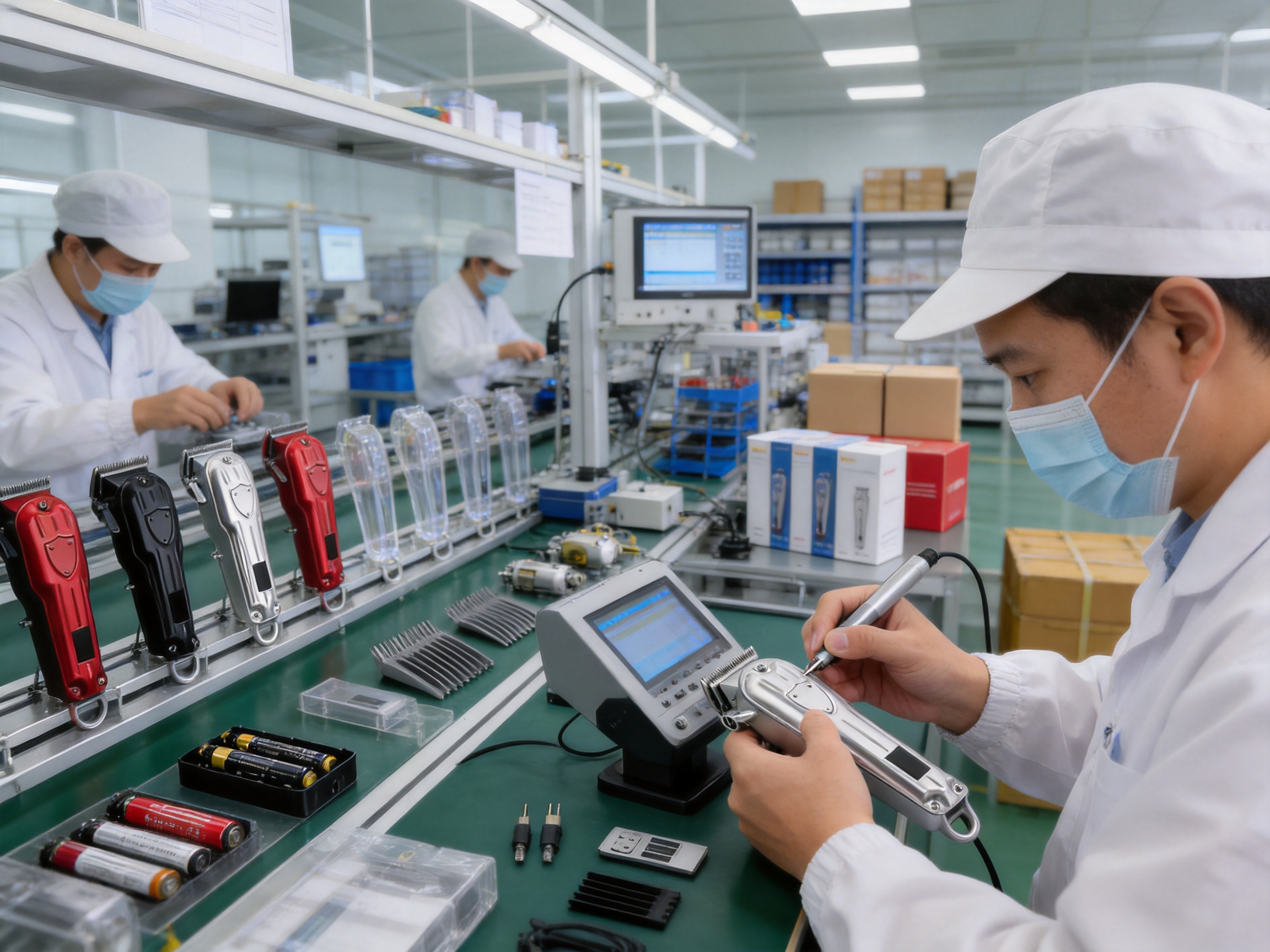
Product performance depends heavily on the manufacturing system behind it. Yuyao Laituo Electric Appliance Co., Ltd. operates as an integrated personal care electrical appliance enterprise with capabilities covering research and development, production, assembly, testing, and sales.
The company covers approximately 1,000 square meters and has nearly 100 employees. Its production organization includes automated production lines and precision testing equipment. These resources support a structured workflow from initial product design through component preparation, assembly, inspection, and finished-product release.
Integrated Product Development
Integrated development allows product engineers, manufacturing personnel, and quality teams to communicate during the design process. This is important for grooming appliances because the final product must satisfy several requirements at once. The housing must be moldable and comfortable. The blade must align correctly with the motor. The battery must fit within the internal structure. The charging interface must be accessible and secure. Accessories must fit the packaging layout.
When these factors are evaluated together, the manufacturer can identify potential production issues earlier. This can help reduce unnecessary modifications, improve assembly efficiency, and support more consistent product results.
Automated Production Lines
Automated production lines can improve process consistency in repetitive operations. Depending on the specific station, automation may support component placement, assembly assistance, electrical testing, performance checks, or packaging preparation. Automation does not replace skilled personnel; rather, it helps standardize repeatable tasks while allowing technicians and inspectors to focus on control, adjustment, and verification.
For OEM and ODM customers, automated manufacturing can support more predictable production scheduling. It may also help the factory manage larger orders while maintaining stable assembly procedures. Capacity planning remains dependent on order volume, configuration, component availability, and production timing, but an organized automated line provides a stronger foundation for scalable manufacturing.
Precision Testing Equipment
Testing is essential for rechargeable grooming products. A clipper should be checked for electrical operation, charging behavior, motor function, blade movement, noise or vibration abnormalities, and overall assembly quality. Battery-powered products also require attention to charging safety and runtime-related performance.
Precision testing equipment allows the manufacturer to evaluate products against defined specifications. Testing procedures can be arranged at different stages, including incoming component inspection, semi-finished product inspection, final assembly testing, and pre-shipment quality control. This multi-stage approach helps identify defects before they reach the finished-product packaging stage.
Full-Process Production Capability
The company describes its production capability as covering the full process from design and development to finished-product assembly. This is a significant advantage for buyers that prefer a single manufacturing partner. Working with an integrated supplier can simplify communication, sample development, engineering changes, production monitoring, and order coordination.
A full-process supplier may also provide better continuity between prototype and mass production. The team that understands the product’s design can participate in manufacturing adjustments, reducing the risk that production knowledge will be lost between separate contractors.
OEM and ODM Support
OEM and ODM services are important in the personal care appliance industry because brands often require products that match their own positioning, packaging, and sales strategy. The LT-1258 can serve as a foundation for customization and private-label development.
OEM Applications
In an OEM arrangement, the buyer may use an existing product platform while applying its own brand identity. Potential customization areas can include logo application, body color selection, packaging artwork, user manuals, product labels, accessory presentation, and carton design.
This approach can be suitable for importers, distributors, online retailers, barber supply companies, and established personal care brands that want to introduce a rechargeable hair clipper without developing an entirely new mechanical platform.
ODM Applications
ODM cooperation may involve deeper product development. Depending on the project, customers may discuss changes to appearance, color combinations, accessory sets, charging configuration, battery capacity, surface finish, packaging structure, or other product details. More extensive changes require engineering review, tooling evaluation, sample approval, and a clear production plan.
The manufacturer’s experience with molds, electronic assemblies, motor systems, batteries, and personal care products can support the development process. The feasibility of each request should be evaluated according to performance requirements, regulatory obligations, target price, minimum order quantity, and production schedule.
Advantages for Global Buyers
OEM and ODM buyers benefit from having access to a manufacturer that understands both product engineering and export-oriented production. The company has independent export rights and reports that its products are sold to more than 30 countries and regions across Europe, the Americas, South America, and other markets.
International experience can help a supplier understand the importance of documentation, packaging accuracy, product consistency, shipment coordination, and destination-market expectations. It does not eliminate the buyer’s responsibility to confirm local compliance, but it can make cross-border cooperation more efficient.
Quality Management and Certifications
Quality management in personal care appliances requires attention to materials, electrical systems, mechanical performance, battery handling, assembly, packaging, and user instructions. The company states that its products have passed CE and RoHS certifications.
CE marking is associated with applicable European Economic Area product requirements, while RoHS addresses restrictions on certain hazardous substances in electrical and electronic equipment. The exact applicability and documentation requirements depend on the product configuration, market, and current regulations. Buyers should request and verify relevant technical documents before placing products on the market.
Certifications are valuable because they provide a formal framework for evaluating product safety and environmental material requirements. However, certification should be considered alongside factory quality control. A reliable production system should continue to monitor components and finished products after certification testing has been completed.
For the LT-1258, quality considerations may include:
1. Verification of ABS housing appearance and structural integrity.
2. Inspection of blade alignment, sharpness, movement, and surface condition.
3. Confirmation of motor speed and operating stability according to the agreed specification.
4. Checking battery model, capacity, polarity, installation, and charging behavior.
5. Testing of the USB charging interface and supplied cable.
6. Inspection of comb attachment fit and dimensional consistency.
7. Functional testing after final assembly.
8. Review of packaging, labels, manuals, accessories, and carton quantities.
9. Sampling or full inspection according to the customer’s quality agreement.
Clear specifications are essential. Buyers should define acceptable cosmetic standards, performance limits, packaging requirements, labeling details, and inspection procedures before mass production. The manufacturer can then align production and quality teams with these requirements.
Maintenance and User Care
Maintenance has a direct effect on clipper performance. Users should switch off the device before cleaning the blade area. Loose hair should be removed with the supplied brush. The blade should be lubricated with suitable clipper oil at an appropriate frequency, particularly after regular or intensive use.
Users should avoid immersing the clipper in water unless the specific model has been designed and certified for washing. The charging port and electrical components should be kept dry. The product should be charged with a compatible USB power source, and the cable should be inspected for damage before use.
The comb attachments should be removed and cleaned according to the product instructions. They should be allowed to dry fully before storage. The clipper should be stored in a clean, dry location away from excessive heat, moisture, and impact.
For professional users, a regular maintenance schedule can help support consistent results. The blade should be checked for wear, the housing should be inspected for damage, and the charging and operating functions should be monitored. Proper care may also reduce warranty claims caused by preventable misuse or neglect.
Applications Across Different Customer Groups
Home Users
For household consumers, the LT-1258 offers a practical combination of cordless operation, length-control combs, maintenance accessories, and USB charging. It can be used for family haircuts, neckline trimming, sideburn shaping, and occasional beard-related detailing.
Barbers and Hair Stylists
Barbers and stylists may value the clipper’s motor speed, rechargeable format, accessory selection, and extended operating potential. It can serve as a general-purpose tool or as a secondary device for detail work and mobile appointments. Professional users should select the blade and comb configuration appropriate for their specific workflow.
Travel and Mobile Grooming
The cordless design and USB charging method make the clipper suitable for travel kits. It can be charged using widely available USB power sources and stored in a compact grooming bag. Travelers may appreciate the ability to trim hair without relying on a fixed outlet.
Retail and E-Commerce Brands
Retailers and online brands can position the product as a complete rechargeable haircutting kit. The included accessories create opportunities for clear product-listing benefits, while the available colors support multiple stock-keeping units or coordinated product collections.
Promotional and Gift Programs
The color box and blister small gift box packaging can support promotional distribution, holiday campaigns, employee gifts, and personal care bundles. Buyers can discuss packaging artwork and accessory presentation to adapt the product to a particular campaign.
Commercial Benefits for Importers and Distributors
Importers typically evaluate more than the product itself. They also consider supplier reliability, minimum order requirements, packaging efficiency, sample procedures, customization options, quality control, lead times, and communication. An integrated manufacturer can reduce the number of external parties involved in these activities.
The LT-1258 offers a product platform with several configurable elements. Battery capacity, color, branding, packaging, and accessory presentation may be reviewed according to the buyer’s business model. This can make it easier to establish different versions for different customer segments.
A distributor may introduce a standard black model for professional channels, a red model for consumer retail, and a transparent version for a trend-focused collection. Alternatively, the 1,500 mAh version may be positioned as an accessible product while the 2,000 mAh version serves customers seeking longer operating potential.
These options can help reduce the need to develop entirely separate products for each segment. They also give sales teams more ways to organize product lines and promotional campaigns.
Suggested Product Positioning
The LT-1258 can be positioned as a practical precision clipper with professional-inspired features for everyday use. Its key selling points may include a 7,200 RPM motor, powder metallurgy blade, rechargeable 18650 battery, USB charging, up to 150 minutes of stated discharge time, four comb attachments, and included cleaning and lubrication accessories.
Marketing materials should describe the product in clear, verifiable language. Claims about runtime, charging, motor performance, and blade quality should correspond to the approved product specification. If different versions are manufactured, the packaging and product listings should identify the relevant battery capacity and charging time accurately.
A balanced product message may emphasize convenience, versatility, maintenance support, and flexible design rather than making unsupported claims about professional certification or universal suitability. This approach can help build customer confidence and reduce misunderstandings after purchase.
Product Development Considerations
Before mass production, buyers should confirm the intended target market and product specification. Important questions include the desired battery capacity, body color, branding method, packaging artwork, accessory quantity, charging cable configuration, user manual language, labeling, and carton requirements.
Sample approval is also important. Buyers should review the physical sample for handling comfort, button operation, blade performance, attachment fit, noise, vibration, charging behavior, color accuracy, packaging quality, and accessory completeness.
For international sales, regulatory review should occur before final packaging approval. The buyer and supplier should determine which tests, declarations, labels, battery documents, transportation documents, and recycling information may be required in the destination market.
It is also advisable to establish a written quality agreement. The agreement may specify cosmetic inspection standards, functional testing, acceptable defect levels, packaging tolerances, sample retention, batch records, and procedures for handling nonconforming products.
Why Manufacturing Experience Matters
Personal care appliances may appear simple from the outside, but their performance depends on the relationship between mechanical, electrical, and user-facing components. A clipper requires precise blade movement, stable motor operation, reliable charging, secure battery integration, durable housing, and accurate accessory fit.
A manufacturer focused on grooming devices can develop experience across these interconnected areas. The company’s product scope includes hair clippers, electric shavers, and body trimmers, allowing knowledge from different personal care products to support ongoing development.
The company’s stated philosophy places quality at the foundation and technology at the center of development. Its use of automated production lines and precision testing equipment provides a manufacturing structure suited to repeatable output. Its location within a complete local electronics manufacturing chain also supports access to component suppliers, mold resources, assembly expertise, and technical services.
For buyers, this type of specialization can be more valuable than selecting a general electrical appliance factory with limited grooming experience. Product-specific knowledge can improve communication about blades, motors, batteries, combs, ergonomics, and maintenance requirements.
Frequently Asked Questions
What type of product is the LT-1258?
The LT-1258 is a rechargeable electric hair clipper designed for haircutting, trimming, sideburn maintenance, neckline cleanup, and general personal grooming.
What blade does the clipper use?
The clipper uses a powder metallurgy blade. This manufacturing approach supports consistent blade production and is intended to provide suitable durability for repeated grooming use.
What is the motor speed?
The stated motor speed is 3.2 volts and 7,200 revolutions per minute. Actual cutting results also depend on blade condition, hair type, battery charge, attachment selection, and maintenance.
What battery options are available?
The product uses an 18650 battery with stated capacity options of 1,500 mAh and 2,000 mAh. Buyers should confirm the selected capacity before production and ensure that packaging information matches the final configuration.
How long can the clipper operate?
The stated discharge time is up to 150 minutes. Actual operating time may vary according to battery capacity, hair resistance, operating frequency, motor load, and product condition.
How long does charging take?
The stated charging time is approximately 2.5 hours or 3.5 hours, depending on the selected configuration. The exact charging specification should be confirmed for each version.
How is the clipper charged?
The clipper uses a USB interface and is supplied with one USB cable. Users should connect it to a compatible USB power source and follow the approved charging instructions.
What accessories are included?
The standard accessory set includes an oil bottle, cleaning brush, four comb attachments, and one USB cable.
What colors can buyers select?
The available body colors are black, red, and transparent. OEM or ODM customers can discuss color selection and potential design adjustments with the manufacturer.
What material is used for the body?
The body is made from ABS, a commonly used material for personal care appliances because of its balance of weight, strength, impact resistance, and molding flexibility.
Is the product suitable for professional barbers?
The clipper can be suitable for barbers, stylists, mobile grooming professionals, and other users who need a rechargeable cutting tool. Professional buyers should evaluate the product against their specific workload, cutting techniques, sanitation procedures, and performance requirements.
Can the product be customized?
The product may support OEM and ODM cooperation, including brand application, body color, packaging, accessory presentation, and selected product configurations. More extensive changes require engineering review and sample approval.
What packaging is available?
The stated packaging method is a color box with blister small gift box packaging. Buyers can discuss artwork, labeling, manuals, and packaging details for their target markets.
Does the manufacturer support international orders?
The company has independent export rights and states that its products are sold to more than 30 countries and regions. International buyers should confirm shipping, documentation, compliance, and commercial terms for each order.
How should the blade be maintained?
The blade should be cleaned with the supplied brush and lubricated periodically with suitable clipper oil. Users should follow the product instructions and keep electrical parts dry unless the product has been specifically designed for washing.
What should buyers confirm before placing a bulk order?
Buyers should confirm the battery capacity, colors, logo, packaging, accessories, charging configuration, user manual, destination-market requirements, inspection standards, order quantity, production schedule, and final approved sample.
Conclusion
The LT-1258 Precision Blade Hair Clipper combines the core features required for a versatile modern grooming device. Its powder metallurgy blade supports a precision-focused cutting system, while the 7,200 RPM motor provides responsive operating performance. The rechargeable 18650 battery, USB charging interface, and stated discharge time of up to 150 minutes support cordless convenience for home, travel, and professional-style use.
The four comb attachments expand haircutting flexibility, while the included oil bottle and cleaning brush support ongoing maintenance. The ABS housing is available in black, red, and transparent, giving brands several options for visual positioning. Color box and blister small gift box packaging further support retail presentation and gift-oriented sales.
For commercial buyers, the product’s value extends beyond its specifications. The manufacturer provides OEM/ODM capabilities, integrated product development, automated production lines, precision testing equipment, and full-process manufacturing from design through assembly. Its experience in personal care appliances, export capability, and stated CE and RoHS certification background provide a foundation for international cooperation.
By combining a practical product platform with flexible customization and organized manufacturing support, the LT-1258 can serve as a strong option for distributors, private-label brands, barber supply companies, e-commerce sellers, and personal care product importers seeking a dependable rechargeable hair clipper solution.
References
1. Product specification information supplied for the LT-1258 Precision Blade Hair Clipper.
2. Manufacturer information supplied for Yuyao Laituo Electric Appliance Co., Ltd.
3. General technical literature on powder metallurgy components and precision metal manufacturing.
4. General industry literature on rechargeable lithium battery operation in portable personal care appliances.
5. General guidance on electric hair clipper cleaning, lubrication, blade maintenance, and safe charging practices.
6. General regulatory reference materials concerning CE conformity assessment for applicable electrical products.
7. General regulatory reference materials concerning RoHS substance restrictions for electrical and electronic equipment.
Product: LT-1258 Precision Blade Hair Clipper
+86-574-62151741
+86-13655842900
laituo@google.com
No. 22 Liufang Road, Yuyao Industrial Park, Ningbo City, China
Copyright © Yuyao Laituo Electric Appliance Co., Ltd. All Rights Reserved
OEM/ODM Hair Removal Tool Epilator Manufacturers
