
 русский
 Français
 Español
 Deutsch
 عربى
عربى
LT-1258 Precision Blade Hair Clipper: A Practical Guide to Performance, Design, and OEM/ODM Manufacturing
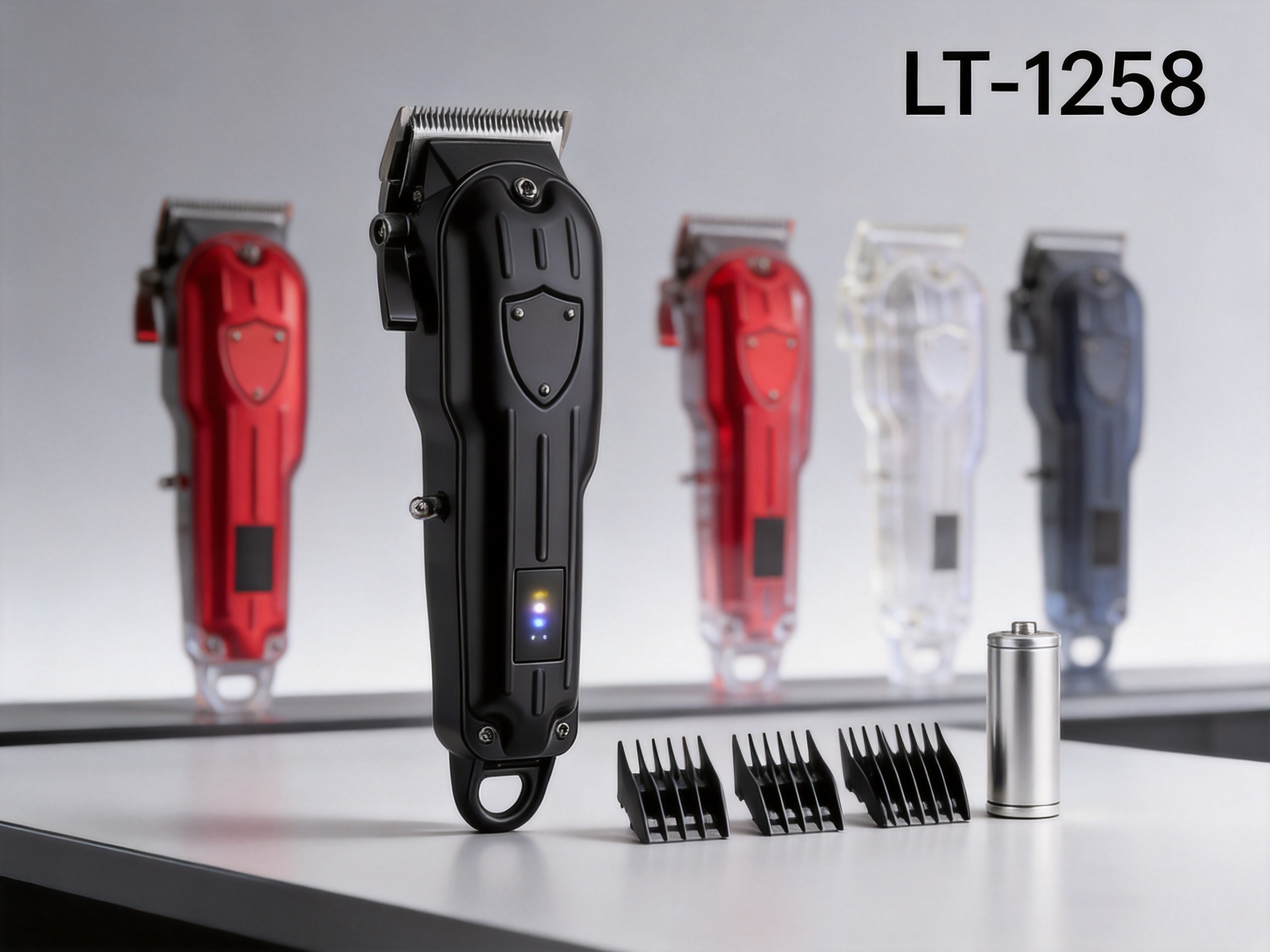
The LT-1258 Precision Blade Hair Clipper is a versatile electric hair clipper designed for efficient personal grooming, professional barbering, family use, and private-label product programs. It combines a powder metallurgy blade, a high-speed motor, a rechargeable 18650 battery platform, USB charging, four comb attachments, and a compact gift-box packaging solution. These features position the model as a flexible option for distributors, grooming brands, retailers, and consumers seeking reliable cordless clipping performance in a practical format.
Electric hair clippers have developed from simple corded appliances into multifunctional grooming tools that support home haircuts, beard shaping, neckline detailing, sideburn trimming, and general styling. Buyers now expect more than basic cutting ability. They look for stable motor performance, comfortable handling, long operating time, convenient charging, useful accessories, attractive packaging, and consistent manufacturing quality. The LT-1258 addresses these requirements through a balanced configuration centered on usability and production flexibility.
The product is manufactured by Yuyao Laituo Electric Appliance Co., Ltd., a Chinese personal care appliance enterprise specializing in electric hair clippers, electric shavers, body groomers, and related grooming devices. The company integrates research and development, production, assembly, testing, and sales. Its location in Yuyao, an area widely associated with mold manufacturing and electrical appliance production, provides access to a complete local industrial chain that supports product development and OEM/ODM cooperation.
This article examines the LT-1258 in detail, including its construction, blade technology, power system, accessories, packaging, user benefits, competitive advantages, quality approach, manufacturing capabilities, and potential applications in international markets.
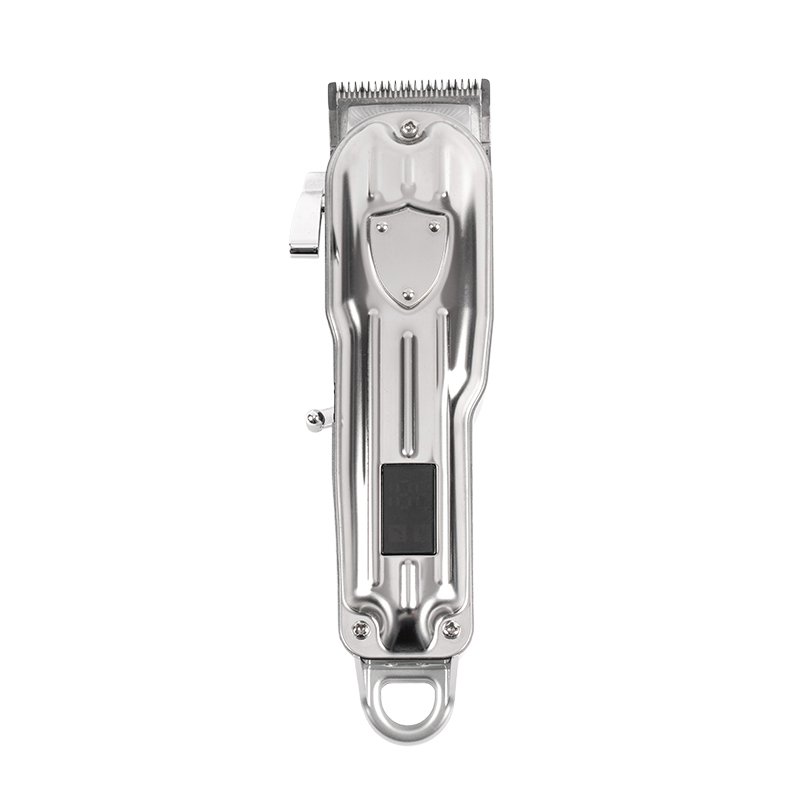
LT-1258 Precision Blade Hair Clipper
Product Overview
The LT-1258 is designed as a precision blade hair clipper in the electric hair clipper category. Its main body is produced from ABS material and is available in black, red, and transparent color options. These color choices give importers and brand owners flexibility when building product collections for different market segments. Black can support a professional or minimalist appearance, red can create a more energetic retail presentation, and transparent styling can appeal to buyers seeking a modern or distinctive visual identity.
The clipper uses a 3.2-volt motor rated at 7,200 revolutions per minute. This motor speed is intended to support fast blade movement and efficient hair removal during normal grooming tasks. A high-speed motor can help reduce the need for repeated passes over the same area, particularly when the user maintains the blade correctly and selects the appropriate comb attachment. The rated power is 5 watts, providing a compact power profile suitable for a rechargeable personal grooming appliance.
Power is supplied by an 18650 lithium battery configuration available in 1,500 mAh or 2,000 mAh versions. The available battery options enable buyers to select a configuration according to target price, expected usage duration, and market positioning. The stated discharge time is up to 150 minutes, while charging requires approximately 2.5 or 3.5 hours depending on the battery specification and product configuration.
Charging is performed through a USB interface, and the product is supplied with one USB cable. USB charging is particularly useful for modern consumers because it allows the clipper to be charged through compatible adapters, computers, power banks, and other common USB power sources. This reduces dependence on a proprietary wall charger and can simplify logistics for international distribution.
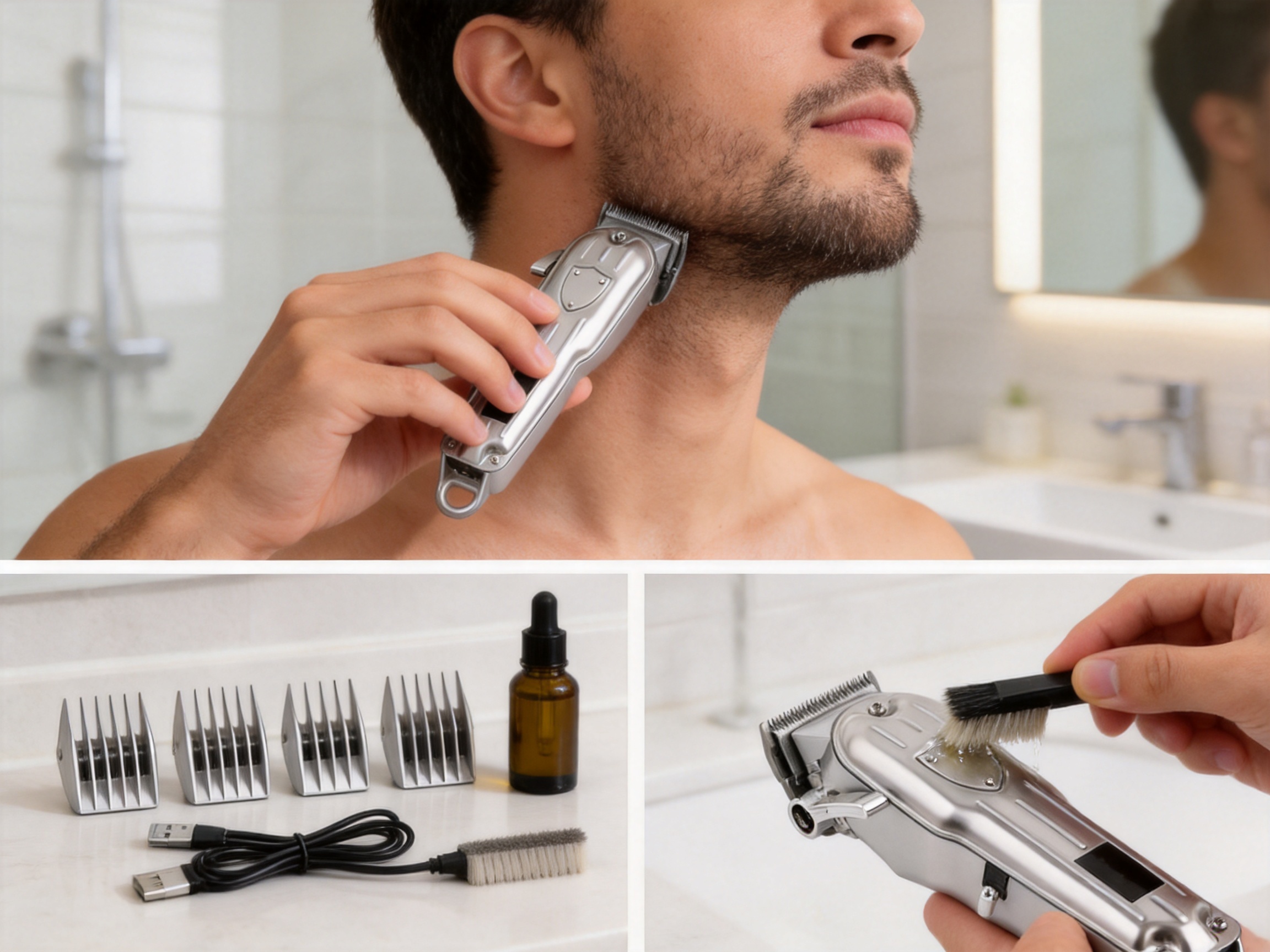
The standard accessory package includes an oil bottle, a cleaning brush, four comb attachments, and a USB cable. Together, these accessories support the core requirements of operation, maintenance, and styling adjustment. The comb attachments can assist users who prefer different cutting lengths, while the oil bottle and brush help maintain blade movement and remove hair debris after use.
Key Specifications
| Specification | LT-1258 Configuration |
|---|---|
| Product type | Precision blade electric hair clipper |
| Available body colors | Black, red, and transparent |
| Body material | ABS |
| Blade material or process | Powder metallurgy |
| Motor rating | 3.2 V, 7,200 RPM |
| Rated power | 5 W |
| Battery options | 18650 lithium battery, 1,500 mAh or 2,000 mAh |
| Charging interface | USB |
| Charging time | Approximately 2.5 or 3.5 hours, according to configuration |
| Discharging time | Up to 150 minutes |
| Included accessories | Oil bottle, cleaning brush, four comb attachments, and USB cable |
| Packaging | Color box with blister small gift box packaging |
Precision Blade Design and Cutting Performance
The blade is one of the most important components of any hair clipper because it directly affects cutting efficiency, user comfort, maintenance requirements, and product lifespan. The LT-1258 uses a powder metallurgy blade. Powder metallurgy is a manufacturing process in which metal powder is compacted and formed under controlled pressure before being treated to achieve the required mechanical properties. When appropriately engineered, this process can support consistent dimensions and repeatable production across large quantities.
For a clipper manufacturer, dimensional consistency is highly valuable. The moving and stationary blade elements must work together with suitable alignment and clearance. If tolerances vary too widely, a clipper may produce uneven cutting, increased vibration, excessive noise, or uncomfortable pulling. A controlled blade production process helps create repeatable assemblies and supports more stable product quality from batch to batch.
The precision blade concept also supports detailed grooming. Users can employ the clipper for general hair reduction, edge maintenance, sideburn shaping, beard outline work, and neckline cleanup. The included comb attachments provide additional length control, helping users move between closer trimming and longer guarded cutting. The exact result naturally depends on hair type, attachment selection, user technique, and maintenance condition.
Blade performance is not determined by material alone. It also depends on motor output, assembly accuracy, lubrication, cleaning, and correct use. For this reason, the LT-1258 package includes both an oil bottle and a cleaning brush. Regular cleaning helps remove accumulated hair and product residue, while proper lubrication can reduce friction between moving parts. These simple maintenance steps can help preserve smooth operation over time.
Compared with low-cost clippers that may rely on inconsistent blade components or provide limited maintenance support, the LT-1258 offers a more complete operating solution. The blade, motor, comb attachments, oil, and brush are supplied as a coordinated package rather than as isolated features. This makes the product easier to present to consumers as a ready-to-use grooming system.
Motor and Operating Efficiency
The LT-1258 is equipped with a 3.2-volt motor operating at 7,200 RPM. Motor speed is a significant factor in clipper performance because it influences how quickly the blade travels through hair. A motor that maintains appropriate speed under ordinary load can support a more efficient trimming experience and reduce the likelihood of repeated passes.
The 5-watt power rating reflects a compact appliance designed for personal grooming rather than heavy industrial use. This power level is suitable for a cordless clipper intended for routine haircuts, beard trimming, detailing, and household grooming. The configuration provides a practical balance between operating capability, battery consumption, physical size, and product cost.
A high-speed motor can also contribute to a smoother cutting process when paired with a properly aligned blade. However, performance depends on the interaction of the complete system. Hair density, hair length, moisture, attachment choice, battery charge, and blade cleanliness all affect the cutting experience. A well-maintained clipper is more likely to deliver the intended results than one with clogged or dry blades.
For distributors and private-label brands, the motor specification provides a clear technical selling point. A stated speed of 7,200 RPM allows product listings and packaging to communicate a measurable performance feature. It can help distinguish the model from entry-level products that provide little technical information or use lower-speed motors without clearly explaining the operating configuration.
The motor is also relevant to professional and semi-professional users. Barbers, stylists, and mobile grooming providers may appreciate a cordless unit that can be used for quick touch-ups without managing a power cord. Although professional users should select equipment according to their specific workload and service requirements, the LT-1258 offers a compact option for detailing and general trimming applications.
Rechargeable Battery and USB Convenience
The LT-1258 uses an 18650 battery platform with available capacities of 1,500 mAh and 2,000 mAh. This format is widely recognized in rechargeable electronic products and gives manufacturers flexibility in balancing capacity, cost, and operating time. Buyers can select the battery version that best matches their market positioning and expected customer usage.
The stated discharge time reaches up to 150 minutes. This extended cordless operating period can be useful for users who perform several grooming sessions between charges. It can also benefit professional users who want to complete multiple short services without immediately connecting the clipper to a power source. Actual runtime may vary according to motor load, hair density, battery condition, charging practices, and environmental conditions.
USB charging is one of the product’s most practical advantages. A USB interface is familiar to consumers in many regions and can make the clipper easier to integrate into daily routines. Users may charge it from a suitable USB adapter, laptop, power bank, vehicle charging port, or other compatible source. For travelers, this can reduce the number of dedicated accessories required in a luggage bag.
USB charging can also simplify international product distribution. Different countries use different wall socket standards and plug shapes. A clipper supplied with a USB cable can reduce the need for multiple regional charger versions, although importers must still ensure that the final product configuration, charging source, labeling, and safety documentation comply with the regulations of the destination market.
The charging time is specified as approximately 2.5 or 3.5 hours, depending on the selected battery and configuration. Buyers should confirm the exact charging specification during product development and ordering. Clear charging instructions should be included in the user manual so that consumers understand how to charge and store the product appropriately.
Compared with corded-only clippers, the LT-1258 provides greater freedom of movement. Compared with some cordless products that use nonstandard charging systems, its USB interface can be more convenient and familiar. This combination of cordless operation and accessible charging supports the needs of home users, travelers, barbers, and online retail customers.
Ergonomic Body and Material Selection
The main body is made from ABS, a widely used thermoplastic material in personal care appliances. ABS is valued for its balance of rigidity, impact resistance, moldability, and surface finishing options. These characteristics make it suitable for producing compact appliance housings with controlled shapes, integrated button areas, and a variety of color treatments.
The body colors offered for the LT-1258 are black, red, and transparent. Color selection can influence how a product is perceived at retail. Black often communicates a professional and understated appearance. Red may emphasize energy and visibility. Transparent elements or transparent body treatment can create a technical or contemporary impression and help a product stand out among conventional solid-color clippers.
The compact body format is suitable for handheld grooming. A clipper needs to be stable in the user’s hand while allowing controlled movement around the head, face, beard, neckline, and sideburns. Its housing must also provide protection for internal electrical components during normal handling. The final ergonomic experience depends on the mold design, button placement, surface finish, weight distribution, and assembly quality.
Because ABS is compatible with injection molding, the manufacturer can produce repeatable housing shapes at scale. Injection molding supports efficient production when tooling has been properly developed and validated. It also enables consistent alignment between housing halves, openings, charging ports, and accessory interfaces. This is especially important for OEM and ODM programs that require repeatable appearance across large production batches.
Product appearance is increasingly important in the personal care market. Retail buyers often make rapid judgments based on shape, color, packaging, and perceived quality. The LT-1258 gives brand owners a practical base model that can be positioned for value retail, professional supply, travel grooming, gift programs, or customized private-label collections.
Accessory Package and Daily Maintenance
The LT-1258 includes four comb attachments. Adjustable cutting lengths are among the most important functional requirements for a general-purpose hair clipper because users have different hairstyles and grooming preferences. The combs can help users maintain a more consistent distance between the blade and skin or hair surface, supporting controlled trimming and reducing the risk of removing more hair than intended.
The exact cutting lengths and attachment specifications should be confirmed in the final product documentation for each order. Importers should ensure that the packaging, product page, instruction manual, and included accessories communicate the same information. Accurate accessory presentation is important because consumers often compare clippers based on the number and usefulness of included combs.
The oil bottle supports blade lubrication. A small amount of suitable clipper oil applied according to the user manual can help reduce friction and support smooth blade movement. Lubrication may also help limit heat generation caused by excessive friction. Users should avoid applying unsuitable household oils or excessive amounts of oil, since these may attract dust or affect the appliance’s cleanliness.
The cleaning brush is intended to remove loose hair from the blade area, comb attachments, and accessible parts of the clipper. Cleaning should generally be performed after use or whenever hair begins to accumulate. Before cleaning, the clipper should be switched off and disconnected from its charging source. Users should follow the supplied instructions concerning water exposure because not every electric clipper is designed to be washed or immersed.
The inclusion of maintenance accessories provides a competitive advantage over products sold with only the main unit and a charging cable. It communicates that long-term product care is part of the ownership experience. For retailers, the accessory package can also strengthen the value proposition without requiring a significantly larger product body.
For institutional or professional buyers, accessories can reduce the need to purchase basic maintenance items separately. For consumers, they make the product more approachable immediately after opening. A ready-to-use package is particularly important for online sales, where buyers often expect the listed product to include everything needed for ordinary operation.
Packaging for Retail and Gift Applications
The stated packaging method is color box plus blister small gift box packaging. Packaging serves several roles: it protects the appliance and accessories during transportation, communicates product features at the point of sale, supports brand presentation, and helps organize the product inside the box.
A color box can display the product appearance, key specifications, operating benefits, and accessory configuration. A blister presentation can hold the clipper or components in a visible and orderly position. This can be useful for gift-oriented sales channels, department stores, personal care retailers, promotional programs, and e-commerce fulfillment operations that require an attractive unboxing experience.
Packaging design should clearly identify the product type, battery capacity, charging method, included attachments, and maintenance accessories. It should also provide appropriate warnings and instructions. For export orders, the packaging can be adapted to the language, labeling, compliance, recycling, and consumer information requirements of the destination country.
OEM and ODM customers may use the existing packaging structure as a starting point for their own design. Depending on the agreed project scope, packaging artwork, logo application, color scheme, instruction manual, barcode, and retail inserts can be developed to match the customer’s brand strategy. The ability to combine a tested product platform with customized presentation can shorten the path from product selection to market launch.
Good packaging also helps protect the product during shipping. The clipper, combs, oil bottle, brush, and USB cable should be positioned to reduce movement and prevent cosmetic damage. Packaging validation and sample approval are important steps before mass production, especially when the product will be transported through international distribution networks.
Advantages Compared with Basic Competitor Models
The LT-1258 competes in a broad market that includes low-cost corded clippers, entry-level cordless trimmers, professional barber clippers, multipurpose grooming kits, and private-label personal care appliances. Its competitive position comes from the combination of features rather than from a single specification.
First, the product offers cordless freedom with a rechargeable lithium battery. Users can move around the head and face without managing a cable. This is convenient for home use, mobile grooming, travel, and quick touch-ups. A 150-minute stated discharge time gives the model a substantial operating window compared with products that require frequent charging.
Second, the USB charging interface is practical for modern lifestyles. Consumers are increasingly familiar with USB-powered devices, and many already carry compatible adapters or power banks. This can make the product easier to use away from home and can reduce charger complexity in international markets.
Third, the 7,200 RPM motor provides a clear performance specification. When combined with the precision blade configuration, it supports a positioning focused on efficient cutting and controlled grooming. A measurable motor speed also gives distributors useful technical content for product listings and sales materials.
Fourth, the powder metallurgy blade offers a manufacturing approach associated with controlled forming and repeatable component production. Blade consistency is important for cutting quality and assembly stability. The product is therefore positioned above generic models that may provide less information about blade production or material quality.
Fifth, four comb attachments expand the product’s usefulness. Instead of limiting the clipper to one close-cutting function, the accessories allow users to approach different hair lengths and styling needs. The oil bottle and brush further support maintenance, which can contribute to a better ownership experience.
Sixth, the ABS body is available in three color options. This is valuable for brand owners and distributors that want to address different visual preferences or create product variants. A choice of colors can also help retailers organize collections or support promotional campaigns.
Finally, the product is supported by an OEM/ODM-oriented manufacturer with integrated production capabilities. For commercial buyers, manufacturing support can be as important as the product specification itself. Consistent communication, sample development, quality control, packaging coordination, and export experience can reduce the operational burden associated with launching a private-label clipper.
| Buyer Priority | LT-1258 Response | Potential Market Benefit |
|---|---|---|
| Cordless mobility | Rechargeable 18650 battery system | Convenient use at home, during travel, or in mobile services |
| Long operating sessions | Stated discharge time of up to 150 minutes | Fewer interruptions between charging cycles |
| Charging flexibility | USB interface and supplied USB cable | Compatibility with common USB power sources |
| Cutting efficiency | 7,200 RPM motor and powder metallurgy blade | Suitable positioning for precision and routine trimming |
| Style flexibility | Four comb attachments | Support for different cutting lengths and grooming tasks |
| Product care | Oil bottle and cleaning brush | Improved maintenance readiness for end users |
| Retail presentation | Color box and blister gift box packaging | Suitable for retail, gifting, and private-label presentation |
| Brand differentiation | Black, red, and transparent body options | More flexibility for product collections and target markets |
Manufacturing Infrastructure and Engineering Strengths
The manufacturer behind the LT-1258 is Yuyao Laituo Electric Appliance Co., Ltd., located at No. 22 Liufang Road, Yuyao Industrial Park, Ningbo City, China. The company is rooted in Yuyao, a manufacturing area known for mold expertise and a strong electrical appliance supply chain. This regional environment can support efficient sourcing of tooling, plastic components, electronic parts, motors, batteries, packaging materials, and production services.
The company covers approximately 1,000 square meters and has nearly 100 employees. Its operations include research and development, manufacturing, assembly, testing, and sales. This integrated structure is useful for product programs that require coordination between design decisions and factory execution. When engineering, production, and quality functions communicate closely, changes can be evaluated more efficiently and manufacturing problems can be addressed earlier.
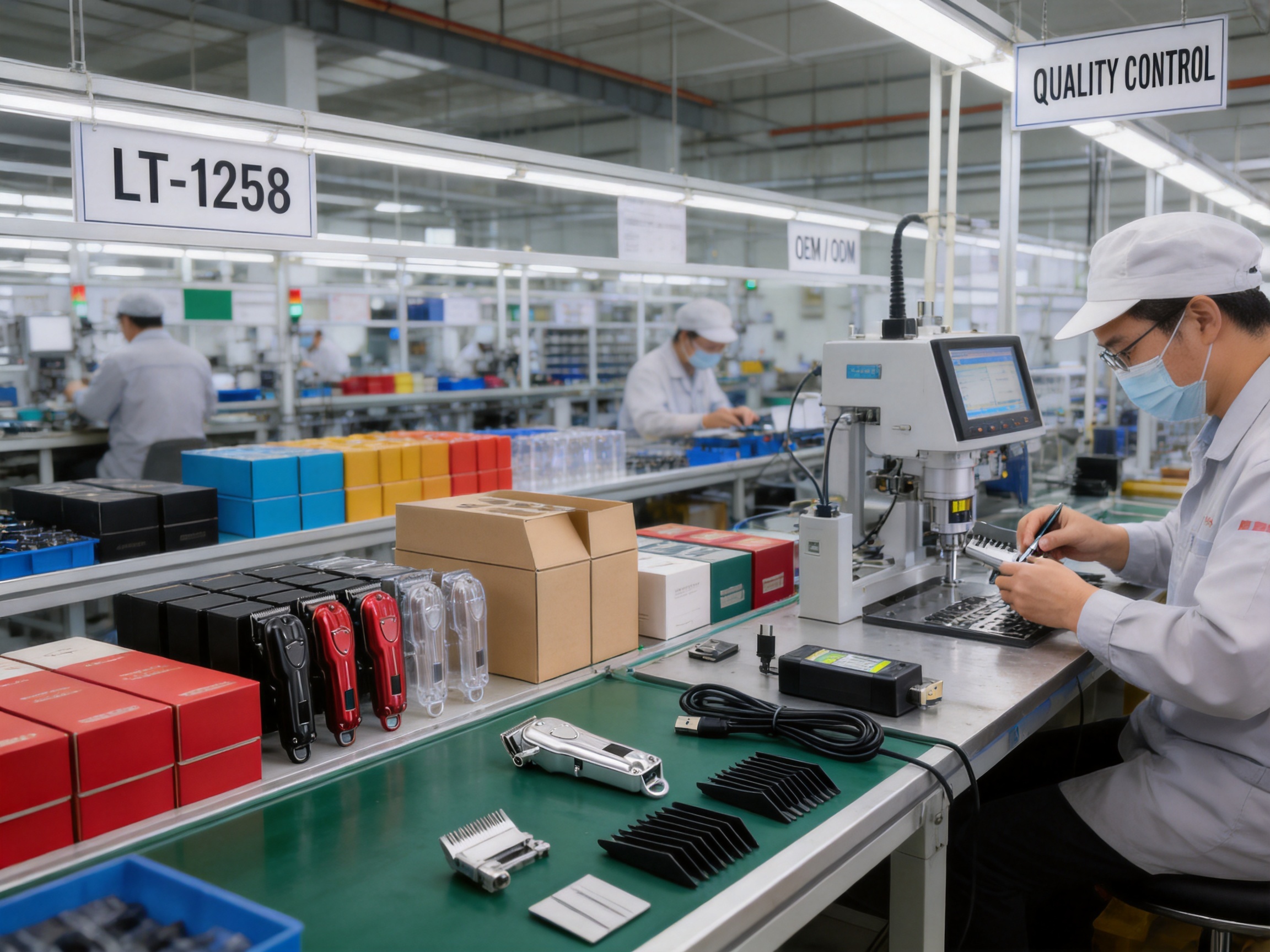
Fully automated production lines are part of the company’s manufacturing capabilities. Automation can improve repeatability in suitable assembly and production stages, reduce variation caused by manual handling, and support stable output. Automated processes do not replace the need for skilled personnel or quality inspection, but they can provide better process control when correctly programmed, maintained, and monitored.
Precision testing equipment is also used in the production environment. For a rechargeable clipper, testing may involve electrical performance, charging behavior, motor operation, battery-related checks, blade movement, appearance inspection, and assembly verification. The specific tests applied to each order should be defined by the product specification, quality agreement, and applicable market requirements.
The company’s full-process production capabilities extend from design and development through finished product assembly. This allows it to participate in more than simple contract assembly. Customers can engage the manufacturer during product selection, configuration review, sample evaluation, packaging development, and production planning. Such cooperation is important for OEM and ODM customers that need a product adapted to their own market rather than an unmodified catalog item.
Tooling knowledge is a particularly valuable strength in the electric grooming industry. The quality of a clipper housing depends on mold design, material flow, dimensional control, surface treatment, and fit between components. Local access to mold-making expertise can support more efficient development of body shells, buttons, accessory interfaces, and packaging inserts.
Manufacturing experience in multiple grooming categories can also support product portfolio development. The company focuses on hair clippers, electric shavers, and body trimmers, while its wider product category capability includes electric shavers, electric hair clippers, body groomers, and nose hair trimmers. Buyers seeking several personal care products may therefore have an opportunity to work with one manufacturing partner across related product lines.
Quality Management and Compliance Orientation
Quality is essential for personal care appliances because the products are used close to the skin and are handled repeatedly. A quality program must consider not only whether the clipper operates during final inspection, but also whether its components remain stable through transportation, charging, repeated use, cleaning, and normal storage.
The manufacturer states that its products have passed CE and RoHS certifications. CE-related conformity supports access to applicable European markets when the specific product configuration meets all relevant requirements and the appropriate technical documentation is maintained. RoHS addresses restrictions on certain hazardous substances in electrical and electronic equipment. Buyers should request current certificates, declarations, test reports, and product-specific documentation during procurement.
Compliance should always be assessed according to the final model, battery configuration, packaging, labeling, destination market, and sales channel. A change in battery capacity, charger arrangement, electronic board, housing, or accessories may require additional evaluation. Importers and brand owners remain responsible for confirming that their marketed configuration complies with local laws and applicable standards.
Quality assurance begins with incoming material control. ABS resin, metal blade components, batteries, motors, electronic parts, USB cables, oils, brushes, comb attachments, and packaging materials should be checked against approved specifications. Incoming inspection helps prevent unsuitable components from entering production and creates a foundation for stable assembly.
In-process control is equally important. Plastic housings should be inspected for appearance and dimensional consistency. Blade assemblies should be checked for alignment and movement. Battery installation should be verified for correct polarity and secure connections. USB charging functions should be tested, and assembled units should be inspected for abnormal noise, vibration, switching problems, or cosmetic defects.
Final inspection can include appearance review, accessory count verification, charging confirmation, motor operation, packaging inspection, and sample-based performance checks. For larger OEM projects, buyers may establish agreed acceptance criteria, sampling plans, defect classifications, carton requirements, and pre-shipment inspection procedures.
The company’s philosophy emphasizes quality as a foundation and technology as an enabling force. This approach aligns with the needs of global buyers who require a repeatable production partner rather than a one-time supplier. Effective quality systems can protect brand reputation, reduce returns, and support long-term customer relationships.
OEM and ODM Opportunities
The LT-1258 can serve as a ready product platform for distributors and retailers, but it can also support customized OEM and ODM projects. OEM cooperation generally involves producing a specified product under the customer’s brand. ODM cooperation may involve adapting an existing design or developing a product configuration that meets the customer’s functional, visual, and commercial objectives.
Potential customization areas include body color, logo treatment, packaging artwork, instruction manuals, barcode labels, accessory presentation, product naming, and market-specific documentation. Customers may also discuss the 1,500 mAh or 2,000 mAh battery option according to their positioning. Any technical change should be reviewed by engineering and verified through samples before mass production.
A structured OEM/ODM process normally begins with requirement collection. The buyer should define target users, sales channel, desired retail price, operating expectations, color preferences, packaging format, destination countries, compliance requirements, annual volume, and delivery schedule. Clear requirements help the manufacturer determine whether the catalog configuration is suitable or whether adjustments are necessary.
Sample development follows requirement review. The buyer can evaluate the clipper’s appearance, hand feel, cutting performance, charging behavior, accessory quality, packaging arrangement, and documentation. Samples should be tested under realistic conditions rather than judged only by appearance. Feedback can then be converted into an approved specification.
After sample approval, the production stage should use controlled materials and documented procedures. Artwork must be checked carefully before printing, especially product names, technical figures, charging instructions, safety statements, and translations. A pre-production sample can help confirm that the final packaging and product appearance match the approved version.
OEM/ODM support is particularly valuable for emerging grooming brands. Instead of investing immediately in a completely new production line, a brand can begin with an established product architecture and focus resources on market research, positioning, customer service, retail strategy, and distribution. As sales develop, the product line can be expanded with additional clipper, shaver, groomer, or trimmer models.
Applications in Different User Segments
For household users, the LT-1258 can support routine haircuts and trimming for adults, teenagers, and family members. The cordless format makes it easier to move around the user, while the comb attachments provide options for different cutting lengths. The included maintenance tools help households keep the product in usable condition between sessions.
For beard and facial styling, the clipper can assist with sideburns, beard outlines, mustache areas, and neckline maintenance. Users should select a suitable attachment and use controlled movements around sensitive areas. The precision blade positioning makes the model relevant to detail-oriented grooming, although users should always follow the supplied operating instructions.
For barbers and stylists, the clipper may be useful for mobile services, quick touch-ups, student practice, or as a supplementary cordless tool. The 150-minute stated discharge time can support multiple short sessions, while USB charging can be useful in a mobile work environment. Professional buyers should evaluate the model against their specific workload, cleaning procedures, and service standards.
For travel retailers, the product’s rechargeable battery and USB cable are practical selling points. Travelers often prefer compact grooming appliances that do not require a dedicated regional wall charger. The color-box packaging can support gift and travel retail displays, while the accessory set provides a complete presentation.
For e-commerce sellers, the product has several easy-to-communicate features: 7,200 RPM motor speed, 150-minute discharge time, USB charging, four comb attachments, powder metallurgy blade construction, and multiple color choices. These details can be used in product pages, comparison charts, photographs, and promotional content, provided the information accurately reflects the ordered configuration.
Recommended Use and Care Practices
Before the first use, the user should inspect the clipper, cable, blade area, comb attachments, and accessories. The product should be charged according to the instructions and checked for any visible damage. A clean and correctly installed attachment helps provide more predictable trimming results.
Users should select the comb attachment according to the desired hair length. Moving the clipper steadily and avoiding excessive pressure can support a more even result. For dense or longer hair, it may be helpful to remove bulk gradually rather than attempting to cut a large amount in a single pass.
After use, loose hair should be removed with the cleaning brush. The blade should be lubricated according to the manufacturer’s instructions. The clipper should be stored in a dry, clean location and protected from unnecessary impact. Unless the product documentation specifically confirms washability, the appliance should not be immersed in water.
The battery should be charged using a compatible USB power source. Users should avoid using damaged cables or charging equipment. If the clipper becomes unusually hot, produces an abnormal smell, or shows other unusual behavior, it should be switched off and inspected by an appropriate service provider.
Good care practices are important not only for consumers but also for retailers and professional users. Explaining maintenance in product content can reduce misuse and improve customer satisfaction. An instruction manual with clear illustrations and straightforward language should accompany every market-ready configuration.
Why Manufacturing Partnership Matters
A grooming product’s success depends on more than the technical specification printed on a box. Buyers need confidence that the supplier can reproduce the approved product, maintain quality across production runs, manage component sourcing, coordinate packaging, and provide responsive communication. A manufacturer with integrated capabilities can help address these requirements.
The company’s experience in personal care electrical appliances allows it to understand the relationship between motor systems, blades, batteries, plastic housings, accessories, packaging, and user expectations. This category knowledge can support more practical development decisions than a supplier with no dedicated grooming focus.
Its base in Yuyao Industrial Park provides access to specialized manufacturing resources. Tooling, injection molding, electronic assembly, battery sourcing, motor production, packaging, and testing can be coordinated within a developed industrial ecosystem. This may support shorter communication paths and more efficient response to engineering or production issues.
The combination of nearly 100 employees, automated production lines, precision testing equipment, and full-process capabilities gives the manufacturer a foundation for serving both standard orders and customized programs. Buyers should still conduct their own due diligence, including factory evaluation, sample testing, compliance review, quality agreement negotiation, and production inspection. However, the available infrastructure provides a credible basis for international cooperation.
The company also reports independent export rights and sales to more than 30 countries and regions across Europe, America, South America, and other markets. International experience can help suppliers understand export documentation, packaging coordination, communication across time zones, and the importance of market-specific product requirements.
Procurement Considerations for Importers
When evaluating the LT-1258 for purchase, importers should first confirm the exact product configuration. The available battery capacities, charging time, body color, packaging format, accessory contents, and labeling should be recorded in the quotation and purchase agreement. This avoids confusion between sample specifications and mass-production specifications.
Second, buyers should request product samples for technical and commercial evaluation. Testing may include charging time, operating duration, motor sound, vibration, blade movement, comb fit, accessory quality, body finish, packaging strength, and user comfort. Samples should be compared with the final approved specification before production begins.
Third, compliance documentation should be reviewed for the intended market. CE and RoHS information may be relevant for European distribution, while other regions may impose additional requirements concerning electrical safety, electromagnetic compatibility, batteries, recycling, labeling, or consumer protection.
Fourth, packaging should be assessed for both retail appearance and shipping durability. The color box and blister presentation should protect the clipper and accessories during handling. Carton dimensions, carton quantity, gross weight, barcode placement, and palletization should be confirmed for logistics planning.
Fifth, buyers should define after-sales arrangements. These may include spare accessories, replacement blades where applicable, warranty terms, troubleshooting instructions, response time, and procedures for handling defective units. Clear after-sales planning can be particularly important for online brands that must respond quickly to consumer questions.
Finally, importers should examine production capacity and lead-time planning. Seasonal demand, promotional campaigns, and new product launches can create volume fluctuations. Early communication with the manufacturer can help coordinate material preparation, packaging approval, production scheduling, and shipment arrangements.
Market Positioning Strategy
The LT-1258 can be positioned as a practical precision clipper for consumers who want cordless convenience without moving into an overly complex multifunctional grooming kit. Its specification supports a balance between performance, accessories, charging flexibility, and retail presentation.
For value-oriented markets, the product can emphasize the combination of a 7,200 RPM motor, rechargeable battery, four comb attachments, cleaning brush, and oil bottle. For professional supply channels, the focus can shift toward cordless mobility, precision detailing, operating duration, and maintenance readiness. For gift channels, body colors and packaging can become more prominent.
For private-label brands, the model can form part of a coordinated grooming collection. A brand may use the clipper alongside an electric shaver, body groomer, or nose hair trimmer to create a broader personal care range. Consistent packaging design, color language, logo placement, and product photography can help make the collection appear unified.
Online product descriptions should be technically accurate and easy to understand. Buyers respond well to clear explanations of what the motor speed means, how long the battery may operate, how USB charging works, what accessories are included, and how the blade should be maintained. Avoiding vague claims can improve credibility and reduce customer confusion.
Q&A
What type of product is the LT-1258?
The LT-1258 is a rechargeable precision blade electric hair clipper designed for home grooming, professional touch-ups, beard and neckline detailing, travel use, and private-label product programs.
What material is used for the body?
The main body is made from ABS. The available body colors are black, red, and transparent, subject to the selected production configuration.
What kind of blade does the clipper use?
The clipper uses a powder metallurgy blade. This manufacturing approach is intended to support consistent component formation and stable blade assembly when produced and controlled correctly.
What is the motor speed?
The motor is rated at 3.2 volts and 7,200 RPM. The stated power rating is 5 watts.
How long can the clipper operate?
The stated discharge time is up to 150 minutes. Actual operating time can vary according to battery capacity, hair density, motor load, usage technique, and battery condition.
Which battery options are available?
The product can be configured with an 18650 lithium battery rated at either 1,500 mAh or 2,000 mAh. Buyers should confirm the selected capacity before ordering.
How is the product charged?
The LT-1258 uses a USB charging interface and is supplied with one USB cable. A compatible USB power source is required for charging.
How long does charging take?
The stated charging time is approximately 2.5 or 3.5 hours, depending on the battery and product configuration.
What accessories are included?
The standard accessories include an oil bottle, a cleaning brush, four comb attachments, and a USB cable.
Is the clipper suitable for different hair lengths?
The four comb attachments are intended to support different cutting lengths and styling preferences. The exact length range should be confirmed in the final product specification and instruction manual.
Can the clipper be used for beard and neckline trimming?
It can be used for general beard, sideburn, neckline, and detail trimming when operated carefully with the appropriate attachment. Users should follow the instructions and avoid applying excessive pressure to sensitive areas.
Is the product suitable for OEM or ODM projects?
Yes. The manufacturer provides OEM/ODM solutions and can discuss product configuration, body colors, logo treatment, packaging, documentation, and other customization requirements according to project scope.
What packaging is available?
The stated packaging method is color box plus blister small gift box packaging. Packaging artwork and market-specific labeling should be confirmed during the OEM or purchasing process.
Does the manufacturer support international markets?
The company reports independent export rights and sales to more than 30 countries and regions. Buyers should confirm destination-market requirements and request the relevant product documentation for their specific configuration.
What certifications are mentioned?
The company states that its products have passed CE and RoHS certifications. Importers should request current, product-specific documentation and verify all requirements applicable to their intended market.
How should the blade be maintained?
Users should remove hair with the supplied cleaning brush and apply suitable clipper oil according to the instructions. The product should be kept clean and dry unless the documentation specifically confirms that washing is permitted.
Conclusion
The LT-1258 Precision Blade Hair Clipper brings together several features that matter in the modern grooming market: a powder metallurgy blade, a 7,200 RPM motor, 5-watt power, rechargeable 18650 battery options, USB charging, up to 150 minutes of stated discharge time, four comb attachments, and maintenance accessories. Its black, red, and transparent body options and color-box blister packaging also provide useful flexibility for retail and private-label positioning.
Its advantages over basic competitor models arise from the complete configuration. The product is not limited to a motor and blade; it is supplied as a ready-to-use grooming package with cutting-length accessories, cleaning support, lubrication support, and cordless charging convenience. This combination can appeal to households, travelers, barbers, e-commerce sellers, promotional buyers, and international distributors.
The manufacturer adds further value through its focus on personal care electrical appliances, Yuyao’s established mold and electronics ecosystem, automated production lines, precision testing equipment, integrated design-to-assembly capabilities, and OEM/ODM experience. Its stated CE and RoHS certification coverage and export experience provide a foundation for international cooperation, while buyers should always complete their own compliance and quality verification.
For brands seeking a practical electric hair clipper platform, the LT-1258 offers a balanced combination of performance specifications, user convenience, accessory completeness, product appearance, and manufacturing support. With appropriate customization, documentation, testing, and market positioning, it can serve as a competitive addition to a broad personal grooming portfolio.
References
1. Product specification information supplied for the LT-1258 Precision Blade Hair Clipper, including motor, battery, blade, accessory, charging, and packaging details.
2. Company profile information supplied for Yuyao Laituo Electric Appliance Co., Ltd., including manufacturing area, staffing, production lines, testing equipment, product categories, export experience, and OEM/ODM capabilities.
3. General technical reference material on powder metallurgy processes and the role of dimensional consistency in small precision metal components.
4. General engineering reference material on lithium-ion battery systems, USB charging interfaces, and rechargeable consumer appliances.
5. General personal care appliance guidance concerning clipper cleaning, blade lubrication, accessory use, and routine maintenance.
6. General conformity and restricted-substance reference material relating to CE and RoHS requirements for applicable electrical and electronic products.
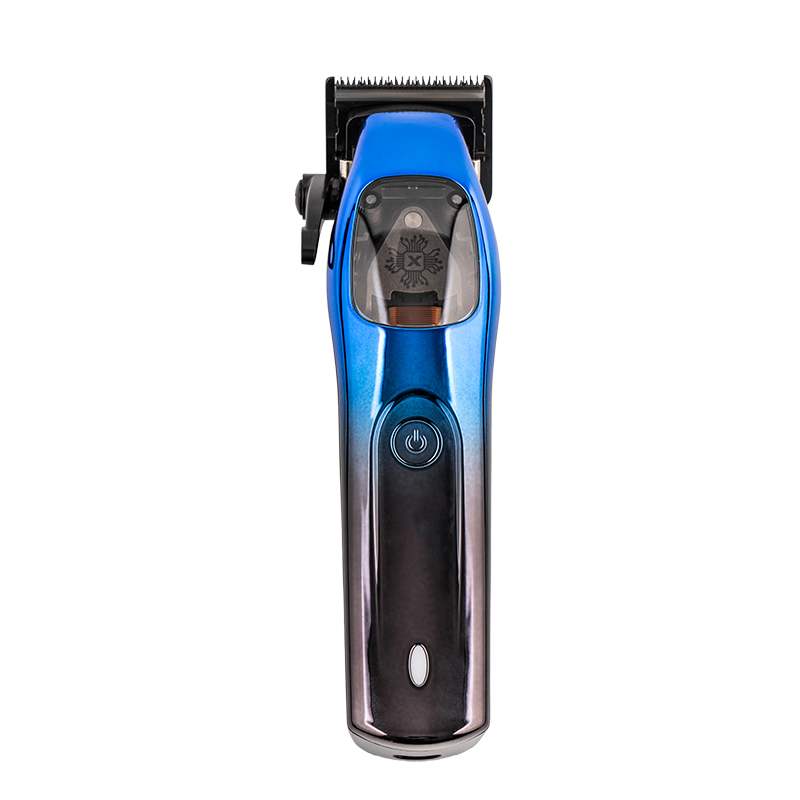
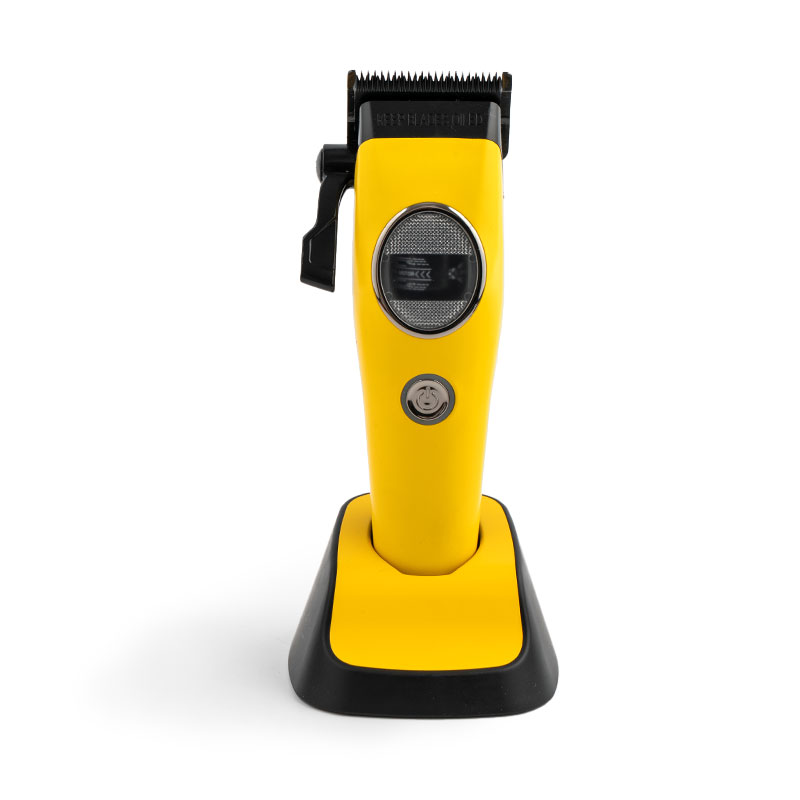
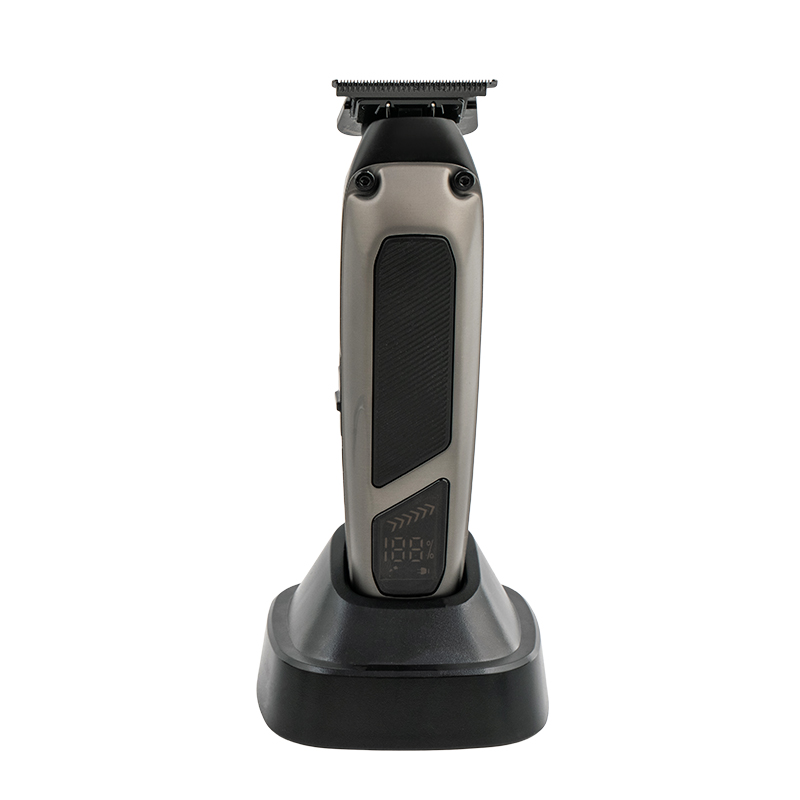
Product: LT-1258 Precision Blade Hair Clipper
+86-574-62151741
+86-13655842900
laituo@google.com
No. 22 Liufang Road, Yuyao Industrial Park, Ningbo City, China
Copyright © Yuyao Laituo Electric Appliance Co., Ltd. All Rights Reserved
OEM/ODM Hair Removal Tool Epilator Manufacturers
